
Leave No Trace for Colorado Elopements: How to Celebrate Responsibly
Why Leave No Trace matters for elopements
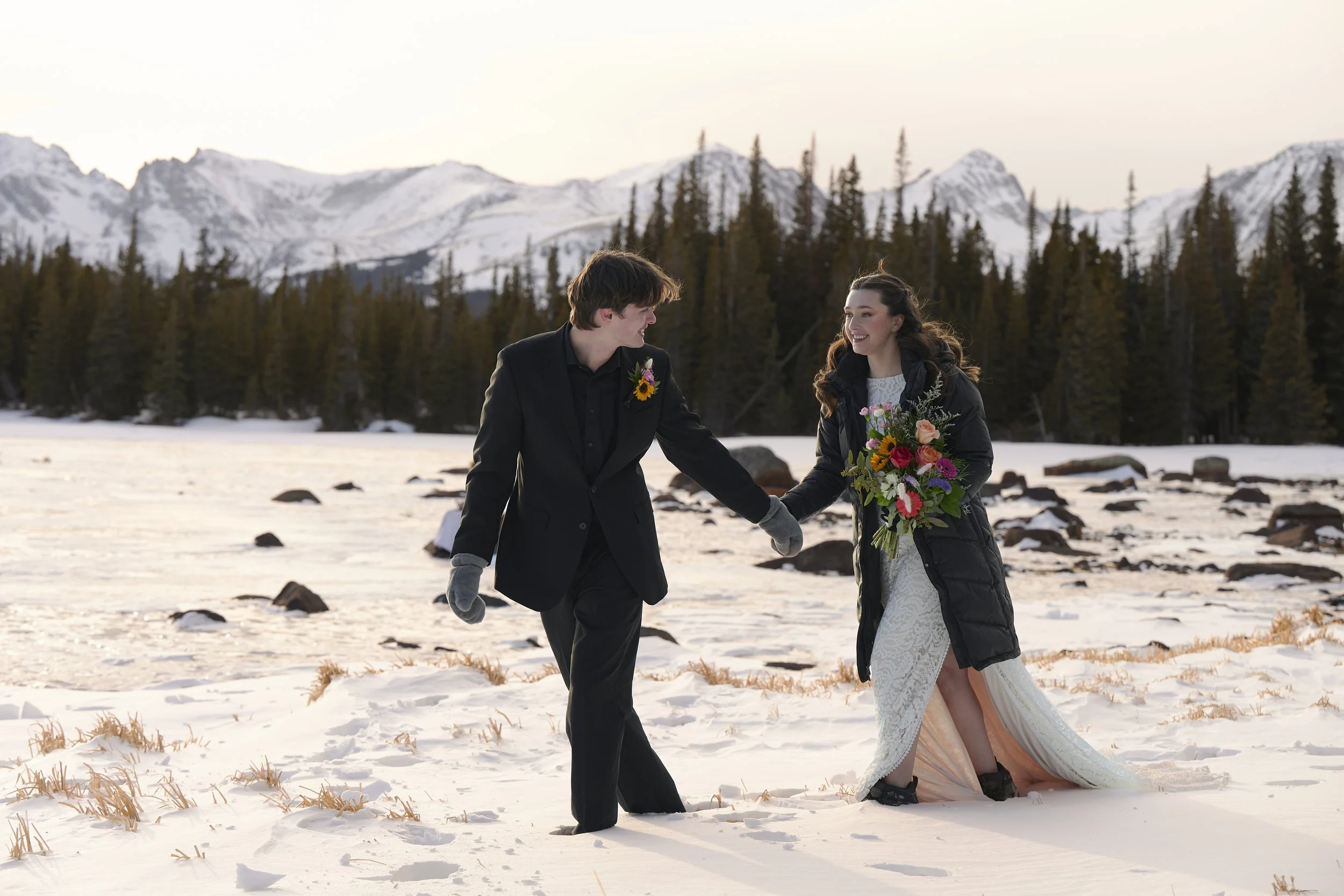
You chose Colorado for a reason: the air that feels like a reset button, the trails that quiet your brain, the kind of views that make you whisper instead of talk. The catch? The more we love these places (and post them), the more pressure they take. That’s where Leave No Trace (LNT) comes in.
LNT isn’t about making your elopement “less.” It’s about making it intentional: celebrating without damaging fragile ground, stressing wildlife, or leaving behind micro-trash that sticks around long after your vows. The goal is simple: take photos and memories—leave the place the same (or cleaner) than you found it.
This guide breaks down the official seven LNT principles and translates them into real decisions for an elopement day: where you stand, what you bring, what you skip, and how to plan a timeline that keeps impact low and photos high. Editorial eyes, documentary hearts—plus a little outdoor ethics.
The 7 Leave No Trace principles, translated for Colorado elopements
The seven principles are designed to apply anywhere—from remote backcountry to local parks—and they’re intentionally broad so they work across different landscapes and rulesets.
Principle 1: Plan ahead & prepare
Pick a location that fits your group size and your “real life” comfort level. Before you lock it in, check the official rules for your exact spot: seasonal closures, trail/parking systems, fire restrictions, and whether ceremonies or professional photography require permits. It’s also smart to pick a spot that matches your guest count and your actual comfort level: weather (I’ve been snowed on in July in Rocky), road access (paved vs. “hope your tires are brave”), and how much hiking you’ll need to do in wedding clothes are all important considerations. But guess what? This is literally what we do—when you book SolPine, we help you map out these details (permits + logistics + timing + light) so your day (and all the days leading up to it) feel effortless.
Principle 2: Travel & celebrate on durable surfaces
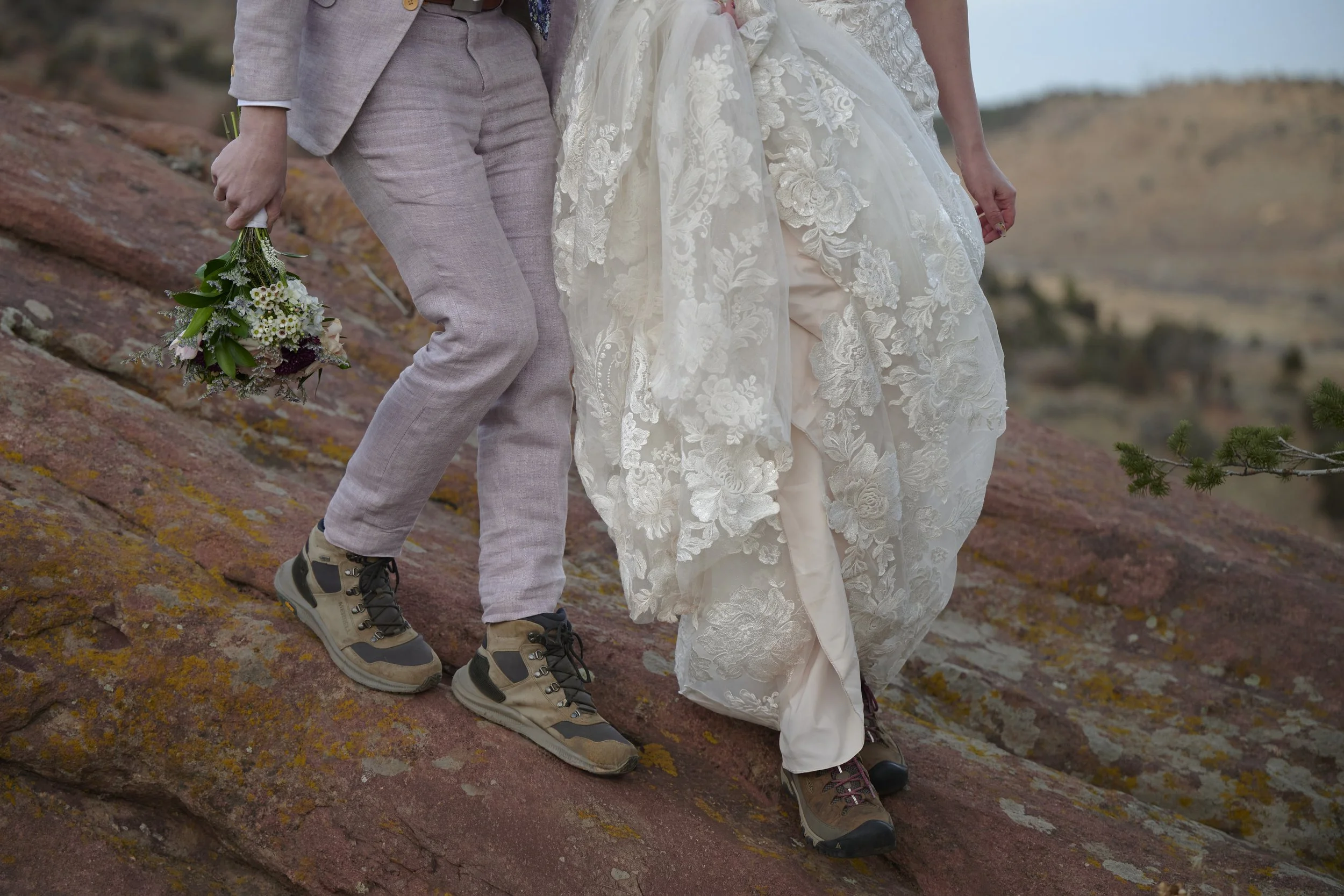
Build your ceremony and portrait plan around one rule: stay “trail-first.” Durable surfaces include established paths, rock, gravel, and (when conditions allow) deep snow. The goal is to avoid crushing plants, widening trails, or creating new side routes. In muddy spring conditions, the least-impact move is often the least glamorous one: stay on the trail and walk directly though the mud instead of tiptoeing around and accidentally creating a new “social trail.” And if your dress gets a little trail seasoning? Iconic. You can wash tulle. Alpine tundra takes years to come back.
Principle 3: Dispose of waste properly
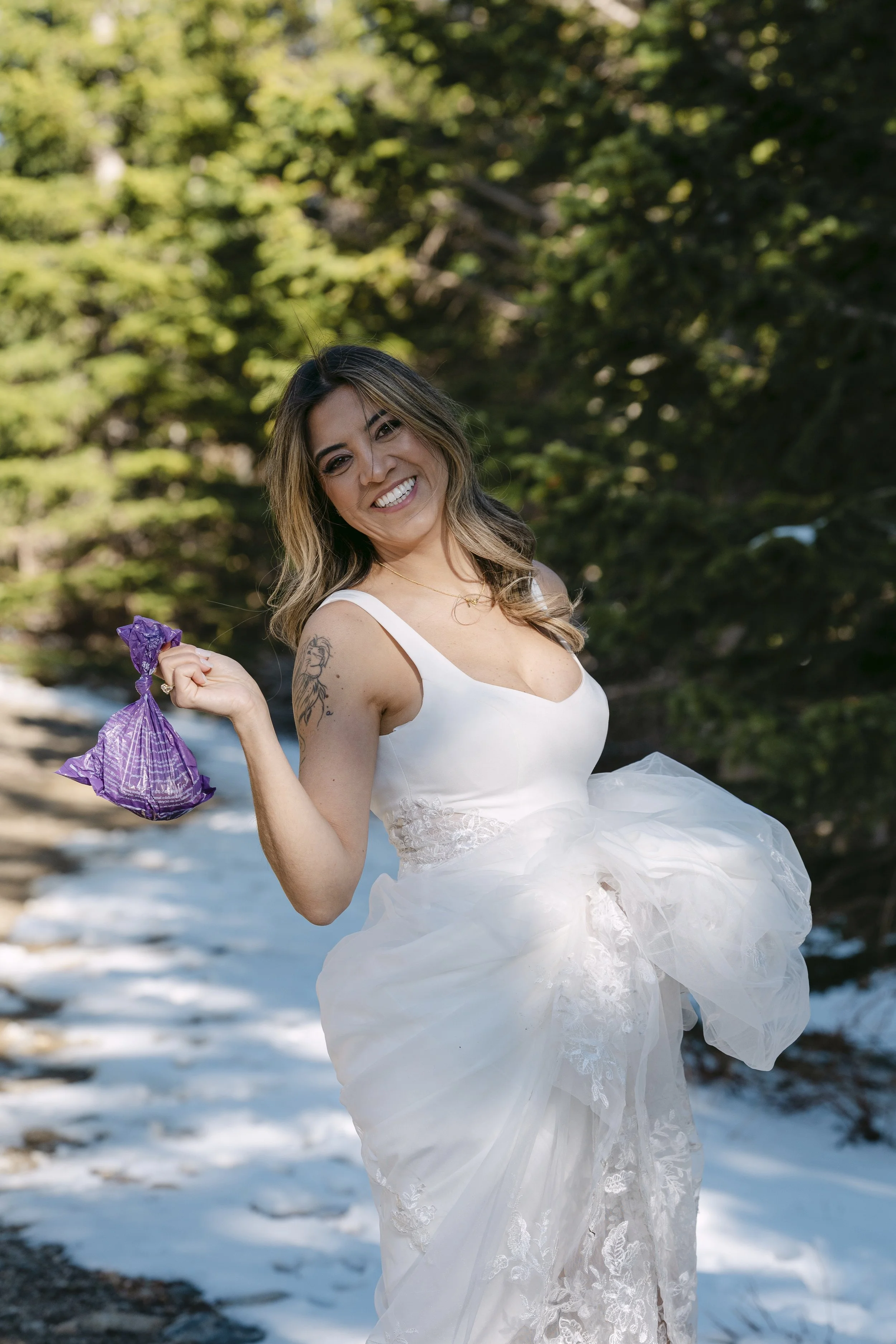
“Pack it in, pack it out” includes the tiny stuff: snack wrappers, tags, bobby pins, tissues, tape, food scraps, etc. But it also includes another type of waste. Use restrooms when they exist. If they don’t… well, nature doesn’t RSVP. Follow the managing agency’s guidance for human waste (often a cathole method with specific distances from water/trails/camps, and packing out toilet paper/hygiene items), because some high-use areas require pack-out systems. Translation: plan for it, laugh about it later, and always verify the rules before you go.
Principle 4: Leave what you find
Skip the “just for the shot” flower picking, rock stacking, or moving natural/cultural objects to build a cute altar—those little changes add up fast. Your keepsake is the photo story, not a souvenir taken from the landscape. If you want meaning, pack it in and pack it out: handwritten vows, a family heirloom, a special ring box, a tiny bottle of champagne for a toast (where allowed), or a bouquet you’ll dry afterward. Let the place stay exactly as wild for the next couple who shows up in awe.
Principle 5: Minimize campfire impacts
Fire restrictions can change quickly, and a lot of parks and open space areas prohibit open flames, so sparklers and open flames are often a hard no. This isn’t just a rule thing; it’s a safety thing. Colorado can be exceptionally dry, and one small flame can turn into a very not small emergency. Smokey Bear has been begging us to chill on the fires for decades, and honestly? He’s right. Bring warm layers, hand warmers, and a thermos—cozy is safer than crispy. If fires are allowed, follow site-specific rules (and use established fire rings where permitted).
Principle 6: Respect wildlife
Watch from a distance, don’t feed animals (even the tiny cute ones), secure snacks and trash, and keep the noise down. This is both ethics and safety, but it’s also a vibe: seeing wildlife from afar is one of those quiet, cinematic moments that makes an elopement feel sacred. Let them be a serene part of your day. Admire the beauty, I’ll grab the long-lens shot if it’s appropriate, and then we’ll give them the space they deserve.
Principle 7: Be considerate of other visitors
Colorado’s iconic places are shared. Many agencies explicitly note that special events can’t close public areas or interfere with normal use, so your plan should assume other humans exist and might be passing by. (We’ll do our best to avoid the crowds.) Opt for quieter times (like weekdays and early mornings), keep ceremonies brief, don’t block trails, and let nature’s sounds be the soundtrack.
Permits and venue rules in Colorado
Permit rules vary by exact location, even within the same agency. Consider this a “patterns” overview, then verify on the official site for your exact park/office and, when in doubt, email or call.
National Park Service (NPS)
Many Colorado national park units require a Special Use Permit for weddings/elopements/ceremonies, often limited to designated locations and subject to group/vehicle limits and restrictions on decor, scattering materials, and exclusive use. For example, Rocky Mountain National Park states that a special use permit is required for ceremonies, permits are issued for designated locations with limits, exclusive use isn’t permitted, and drones are prohibited.
For filming/still photography/audio recording, the EXPLORE Act changed how NPS manages permits: in most cases, permits and fees are not required for groups of eight or fewer with hand-carried equipment in public areas, without exclusive use, without resource impacts, and without added admin costs. Also: if your wedding/ceremony is authorized under a written permit, NPS guidance notes that filming/photography associated with that authorized event does not require a separate filming permit.
Bureau of Land Management (BLM)
BLM uses Special Recreation Permits (SRPs) for certain structured/organized/managed uses when needed to manage visitor use, protect resources, and ensure safety. Requirements are location-dependent; BLM explicitly encourages contacting the local office if you’re unsure and notes SRP applications are handled in its RAPTOR system.
Colorado Parks and Wildlife (CPW) / Colorado State Parks
CPW notes that professional wedding/special event photos may require a photography permit and directs couples to check the specific park’s page for permit requirements and applications. (Treat this as highly park-specific.)
City parks (example: Colorado Springs)
City-managed parks can be surprisingly strict. The City of Colorado Springs’ guidance for Garden of the Gods emphasizes small, brief ceremonies, no alcohol, no amplified sound, no decorations, no scattering materials (rice/confetti), staying on established trails, and not blocking areas.
Bottom line: If any permit or rule detail is unclear for your location, it’s unspecified until confirmed by the managing agency’s official page or office.
How we stay low impact
Rules-First-Planning: We familiarize ourselves with the rules and regulations of all of our elopement locations. We’ll handle the permitting and make sure you’re aware of any restrictions as part of our planning process. We also plan our routes and photo stops to keep ourselves on durable surfaces.
Gear: We prioritize hand-carried equipment, avoid bulky setups that push you off-trail, and follow any drone regulations that may apply.
Movement + framing: We’ll use direction and prompts that keep you on durable ground, then use longer lenses and intentional composition to make the landscape feel massive without stepping into fragile areas.
Waste management: We carry a trash kit and every ceremony spot gets a quick “micro-trash sweep” before we walk away, because we want to make sure we’re leaving nothing behind.
A responsible elopement isn’t less romantic—it’s more intentional. Leave No Trace lets you celebrate in a way that protects the very place you chose. And honestly? Few things look better than a love story that leaves a trail better than it found it.
External Resources:
Leave No Trace Center for Outdoor Ethics — “The 7 Principles” page.
National Park Service — filming/still photography/audio recording policy (EXPLORE Act summary on NPS pages).
Bureau of Land Management — Special Recreation Permits overview + RAPTOR process.
Colorado Parks and Wildlife — weddings/special events photography permit note; plus CPW Leave No Trace guidance on state lands.