
Why We Shoot Weddings on Film (and Always Will)
A Pentax K1000 handed down from my aunt, the red glow of a darkroom, a roll of Portra 400, ten frames of medium format, and why we still shoot weddings on film long after the world stopped requiring it.
There is a half second before the shutter opens when everything narrows to just a single moment. You can't check a screen, you can't fire off twenty more shots, you can't quietly fix it later. You have to trust that you saw the perfect moment.
This is the long version of why I still choose to shoot film. Not because of the current trend. (Although I’m very on board.) Not the marketing, though film photographs do have a way of making people reach for the word "classic." The real answer is more physical than that, and a little stranger, and it starts in a darkroom with a camera that wasn't even mine.
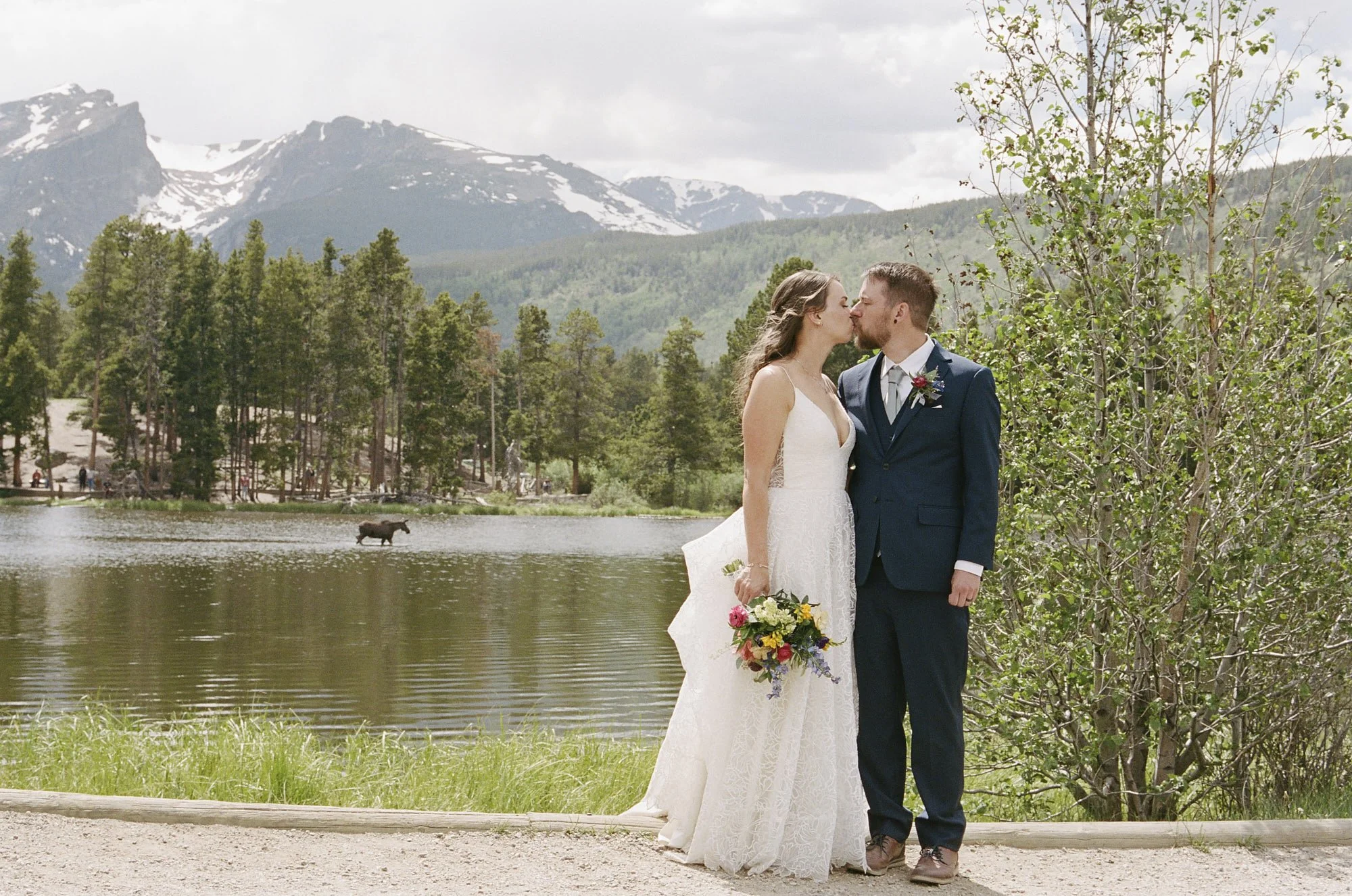
The camera my aunt left me
My first film camera was a Pentax K1000 that belonged to my aunt. By the time it came to me it already had been well used and loved. It’s a fully mechanical, slightly stubborn little machine with a light meter and almost nothing else, which is exactly why photography students have learned on it for fifty years. Nothing about it is automatic; it forces you to do all the thinking. I can’t even begin to tell you how many rolls of film came out less than stellar. Blurry without intention, darker or lighter than anticipated. All of it took time to learn.
There is still nothing quite like standing in the darkroom under a red safelight watching a photo you shot on a roll of film you developed, resolve itself into an image on a piece of photographic paper you exposed. And while I don’t often get to relive that magic anymore, I still love holding my negatives in my hand and seeing what could be created with light and chemistry.
That K1000 that I learned on is still one of my go-tos. Ethan came up on film too, and he is the one who lives in medium format now, so between the two of us a wedding gets seen through more than one kind of glass. Editorial eyes, documentary hearts, and a very heavy set of camera bags.
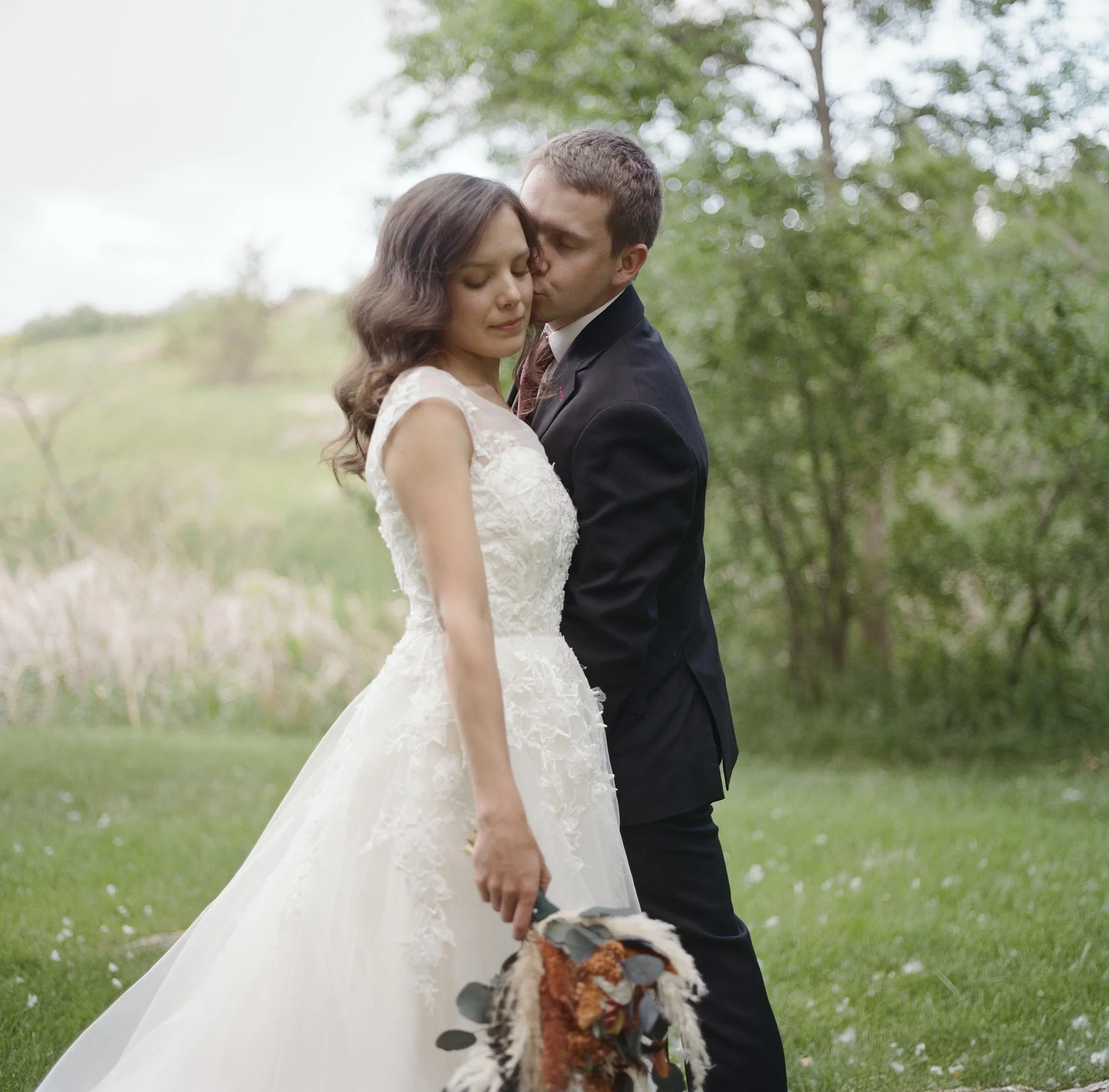
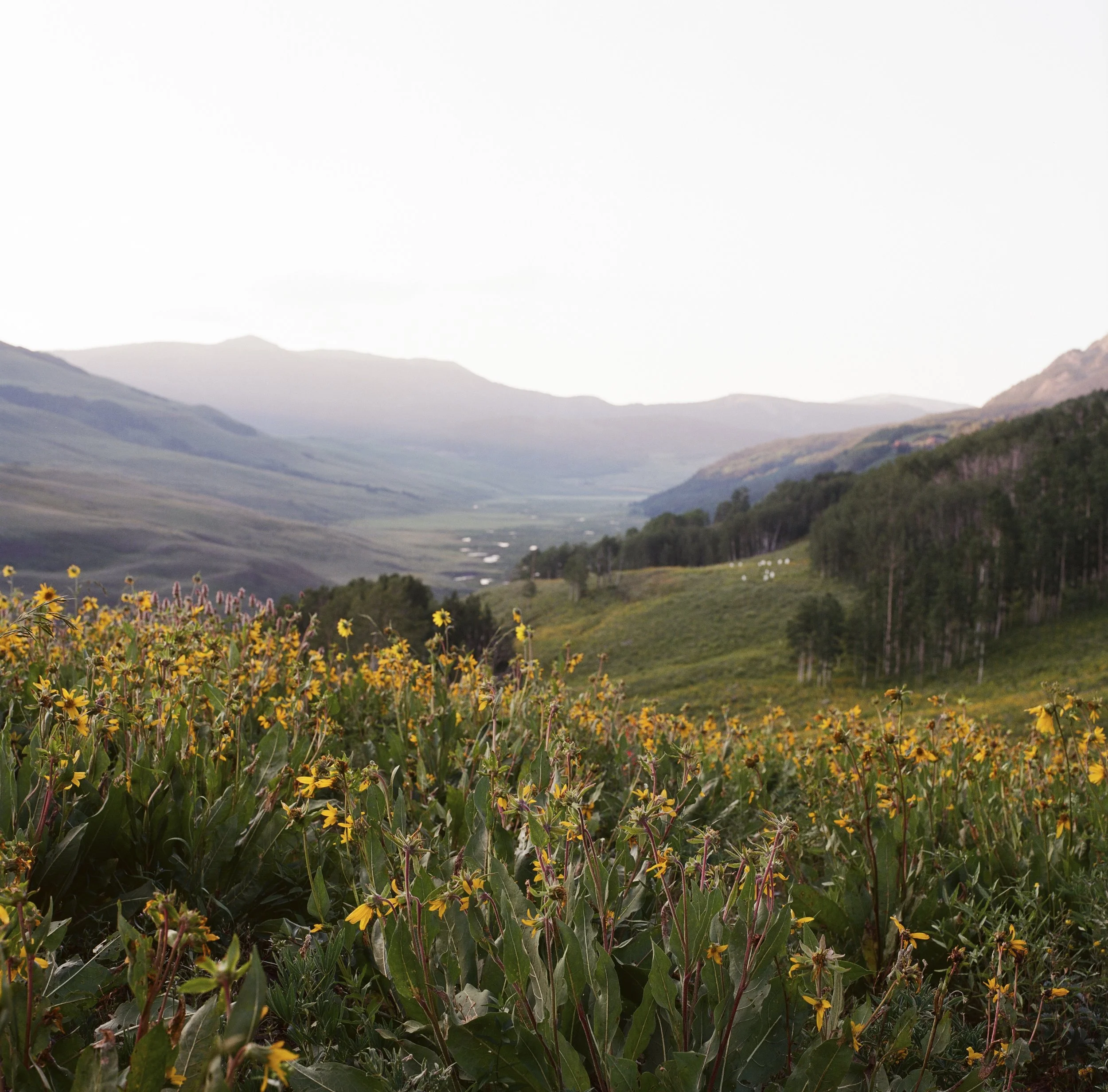
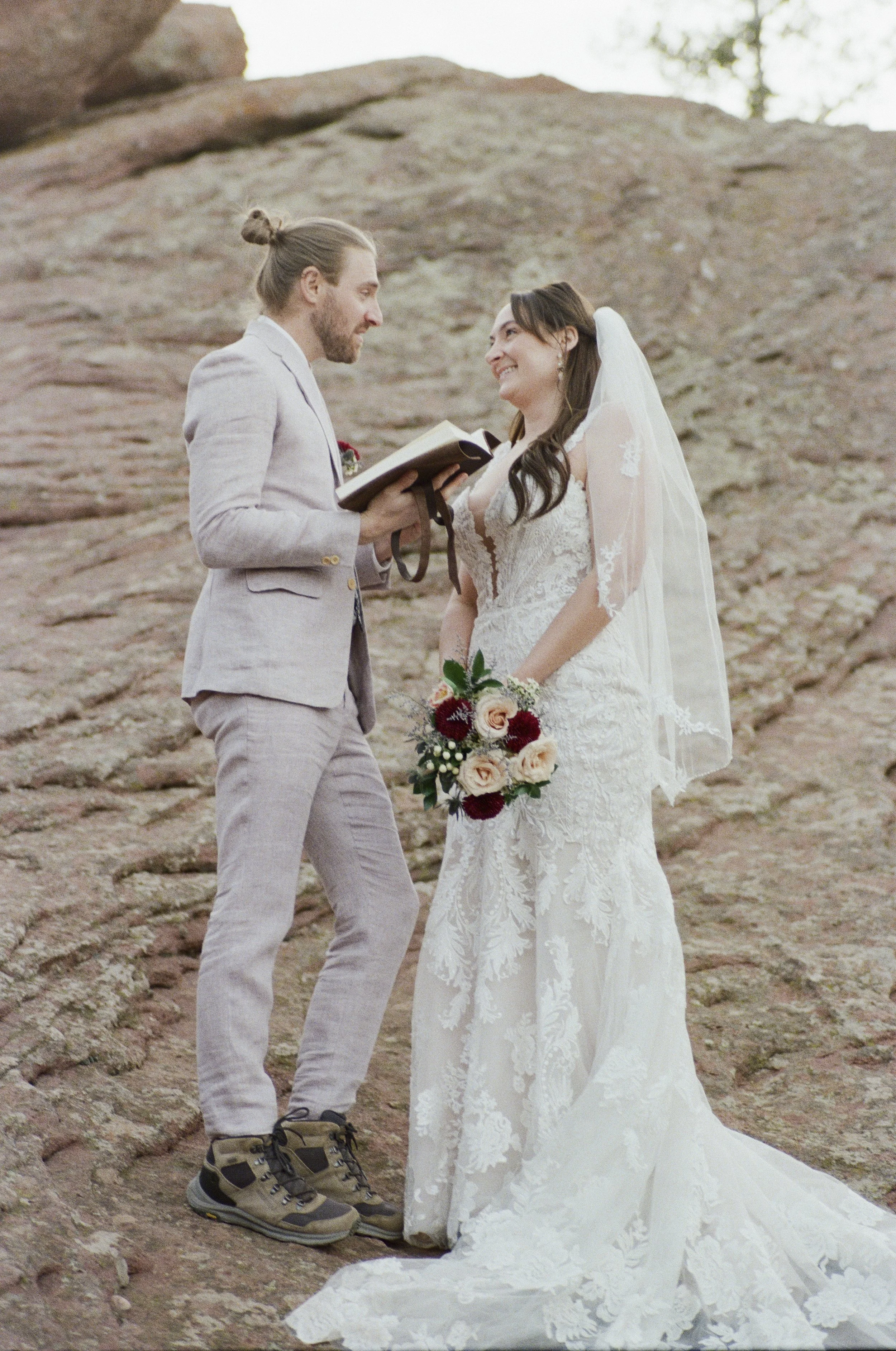
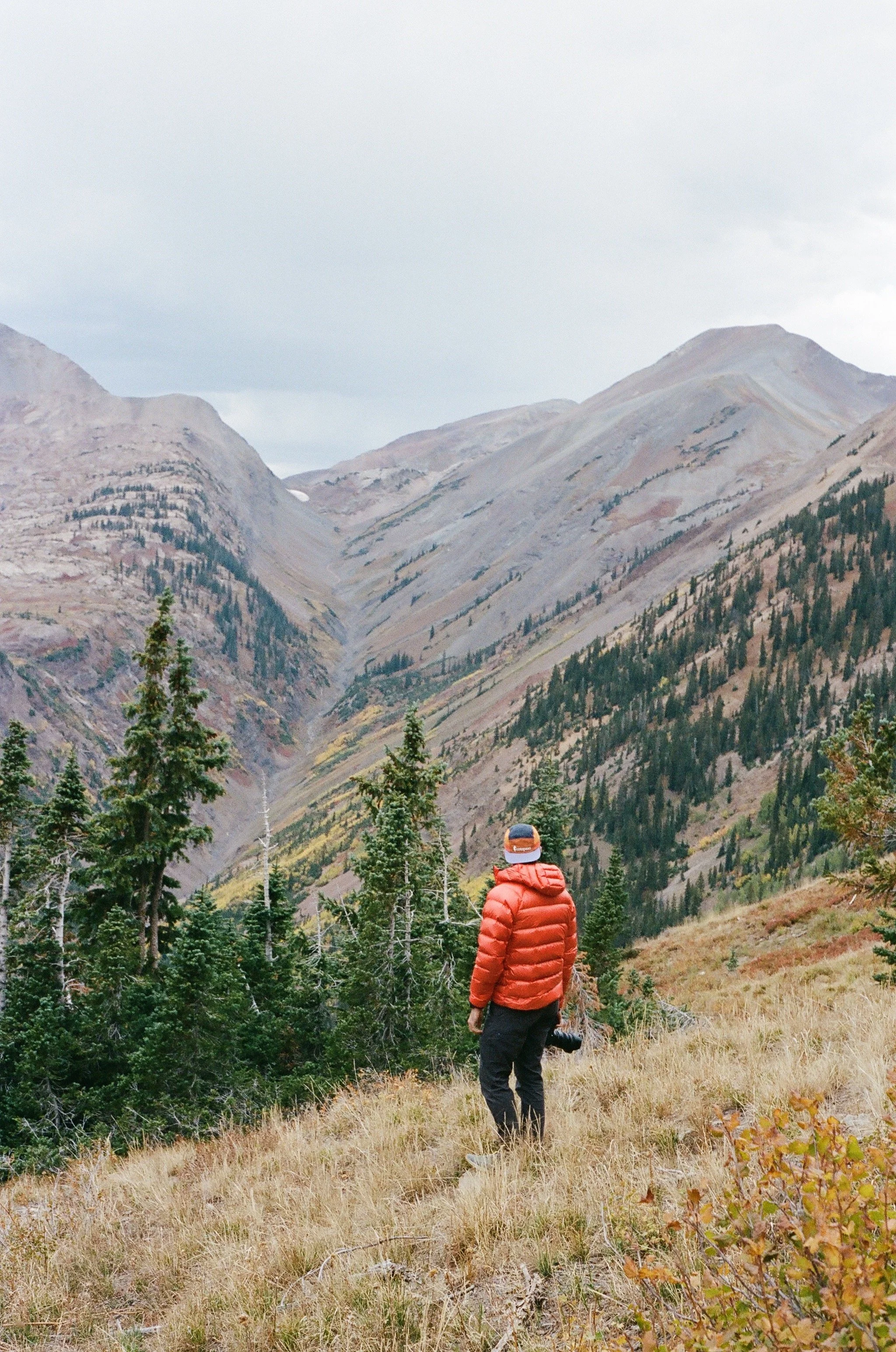
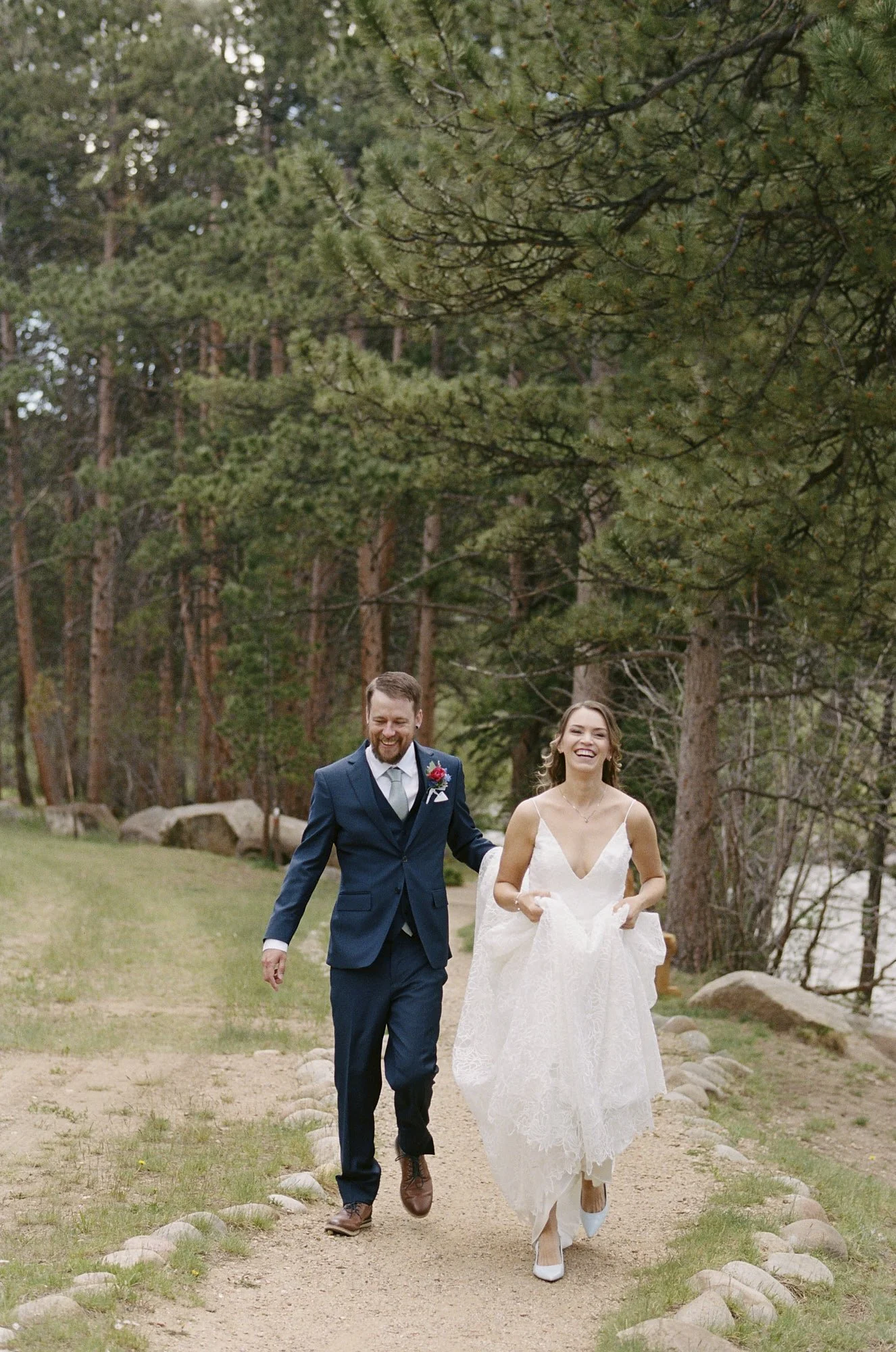
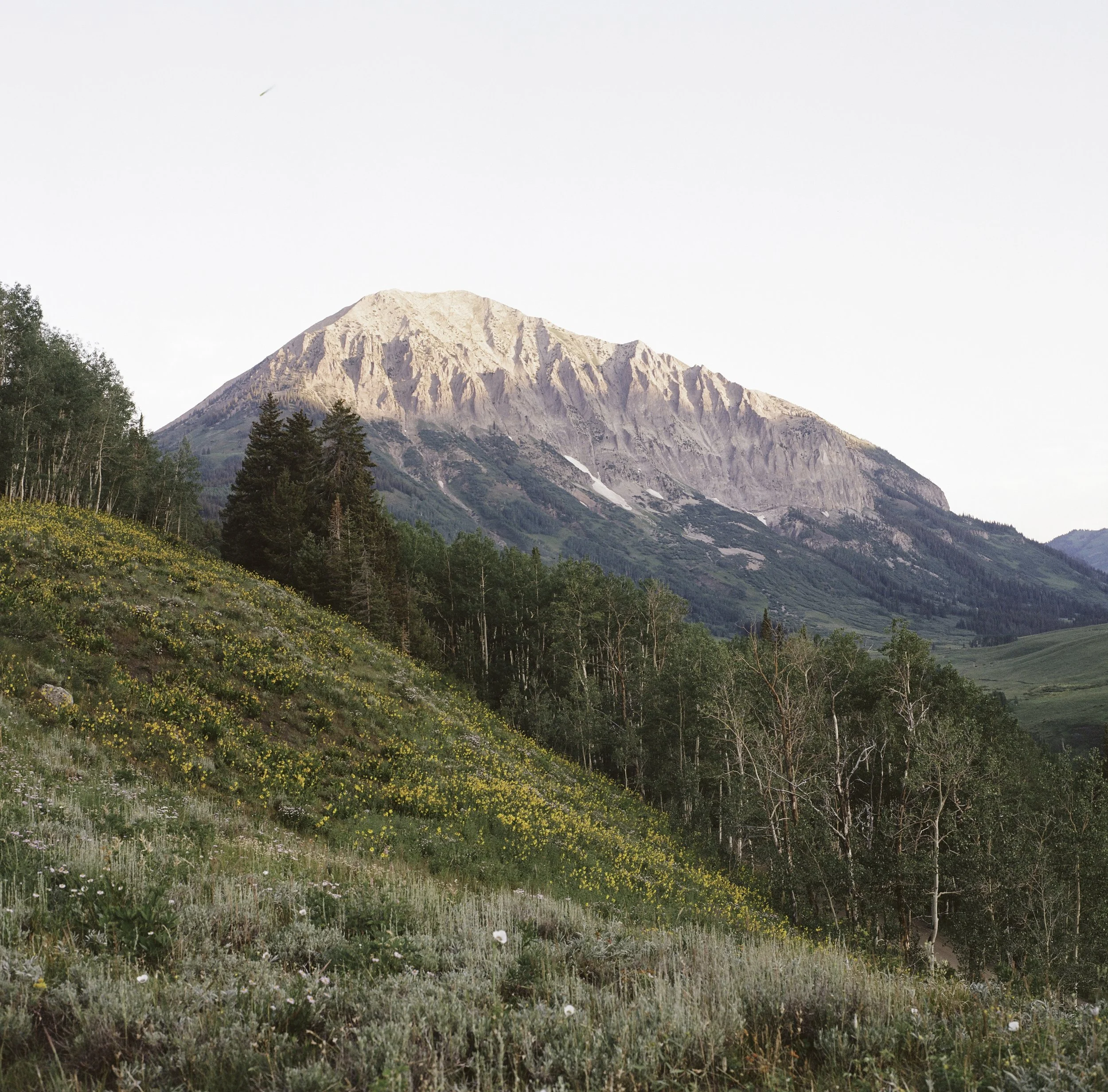
A little alchemy: how film photography actually works
Now let’s get a little nerdy. A photograph on film is not a picture of light. It is light, physically rearranging silver.
A strip of film is plastic coated in gelatin that holds millions of microscopic silver crystals. When light hits one, it nudges a few atoms of silver into place and leaves behind an invisible mark called a latent image. Developer (a chemical) swells those exposed crystals into visible grains of metal. Fixer (another chemical) rinses the rest away so the picture stops changing and becomes permanent. Color film does the same trick in three stacked layers, one each for red, green, and blue, and builds the image out of dye. The photograph is a real event that happened to a real object. The negative is the original. Everything after it is a copy.
None of this is new, which is part of the romance. The first surviving photograph took most of a day to expose onto a pewter plate back in the 1820s. By 1888 George Eastman had loaded roll film into a simple box camera and sold it with the line "you press the button, we do the rest," and photography walked out of the laboratory and into regular life. The 35mm frame borrowed its size from movie film in the 1920s. Medium format 120 film, the exact kind Ethan still runs today, has been in production since 1901.
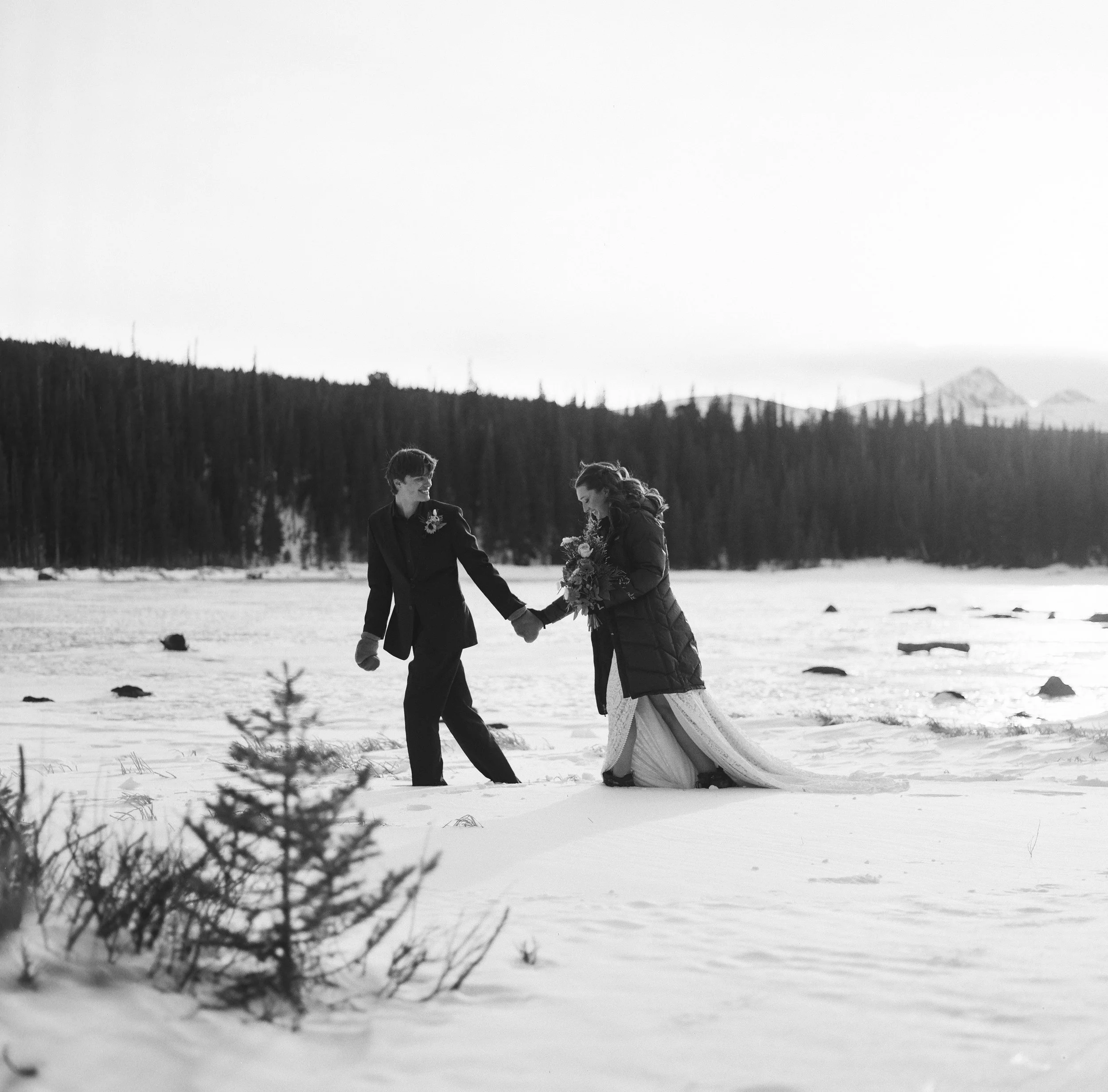
Film vs digital: the look a preset can borrow but never recreate
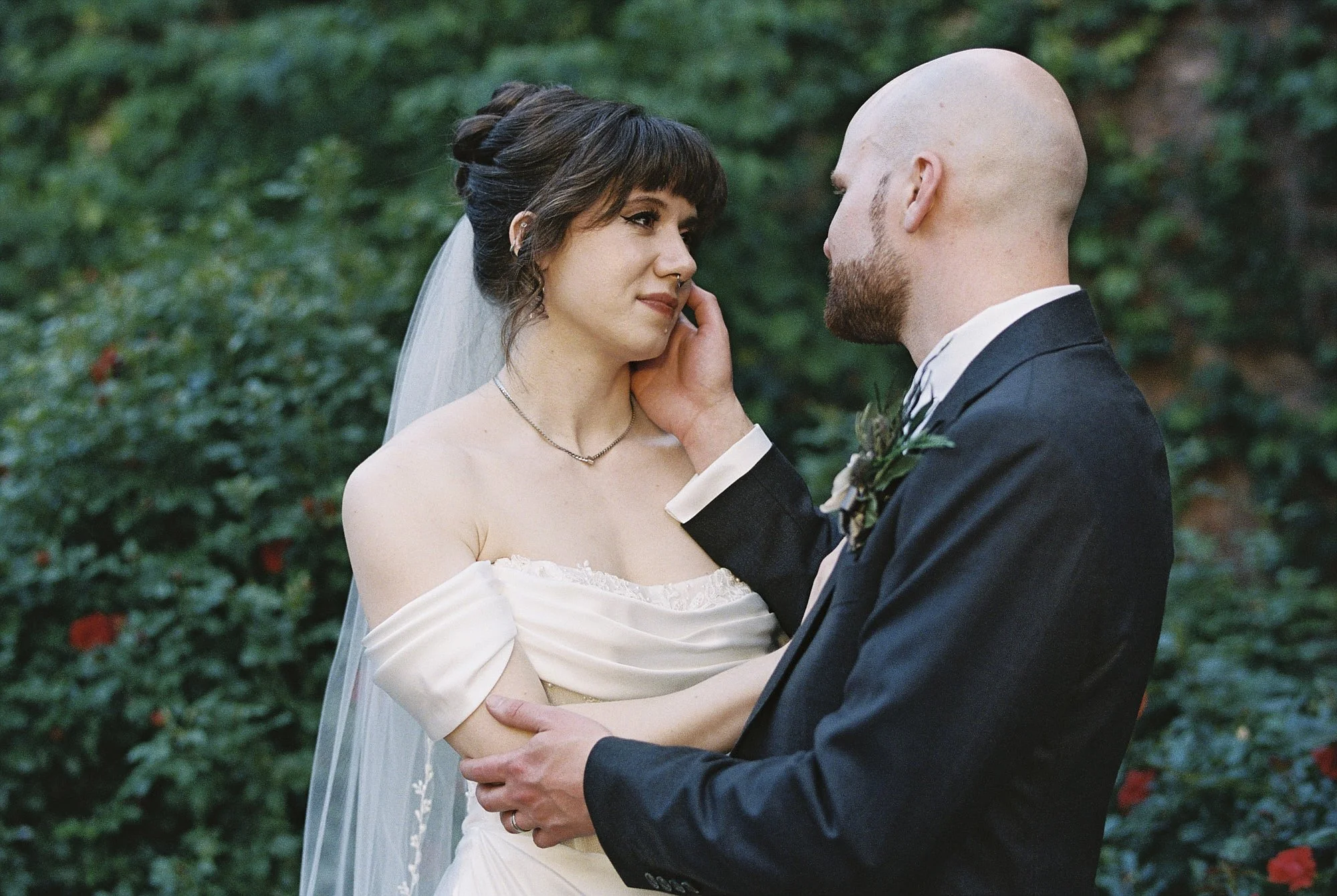
People can usually tell the difference even if they can’t name it. Film has a way with light that reads as gentle: highlights that ease off instead of clipping to harsh white, shadows that keep their color instead of going muddy, skin that stays soft and dimensional without turning plastic, and grain that lands as texture rather than noise. Put a film frame next to a straight digital one and the film photograph almost always looks more alive.
Digital film emulations have gotten genuinely good, and I use and love digital too, so this is not a fight. But it is worth understanding what a preset actually does. It takes a finished digital file and pushes it toward an average idea of how film behaves. It is working backward from a destination. Film works forward. The look is not applied at the end, it is produced in the moment, by that specific emulsion reacting to that specific light in that specific room. The grain is real silver, not a layer dropped on top.
Is film worth it? Every frame has a cost
Every frame on film costs you, in two different currencies.
There is the literal one: every step of film photography costs money from purchasing the roll of film to developing it and scanning it. Every step has a price tag attached with each image costing about the same as a cup of coffee once all is said and done. It’s a wonderful and mildly stressful reason to make every one count.
Then there is the felt one, and it matters more. A digital card holds thousands of frames, so the instinct is to shoot first and sort it out later. A roll of 35mm gives you thirty-six. Medium format gives you ten. When you only have a handful of frames to shoot, you slow down. You wait for the moment instead of holding the shutter button through it. You compose, you wait, and you make the conscious decision to choose an exact moment. This gives you a gallery that is completely different than digital. You won’t have 3 photos with minor differences. You won’t have photos that don’t really matter. Film is the height of curation, because when every from has a cost, it has to be.

A roll of negatives is a story you can hold in order
When a roll comes back from the lab, it comes back as a physical thing. A strip of negatives, frames lined up in the exact order they happened, the getting-ready at one end and the last dance at the other. Lay the strip on a light table, or print the whole roll small as a contact sheet, and you are looking at your day as a sequence. A little filmstrip of the story, start to finish.
That physical strip is also the best archive you will ever own. A negative outlives hard drives, file formats, and whatever cloud you are currently renting. Stored in a sleeve in a drawer, it can be rescanned and reprinted decades from now, and it tends to look better each time scanning technology improves. When your kids go looking for your wedding someday, a strip of film in an envelope is a much friendlier thing to inherit than a forgotten password. It is the tangible part we care about most. Before we leave your day, we want you to end up with something real to hold, not only a link.
The best film stocks for weddings: Portra 400, and where we wander
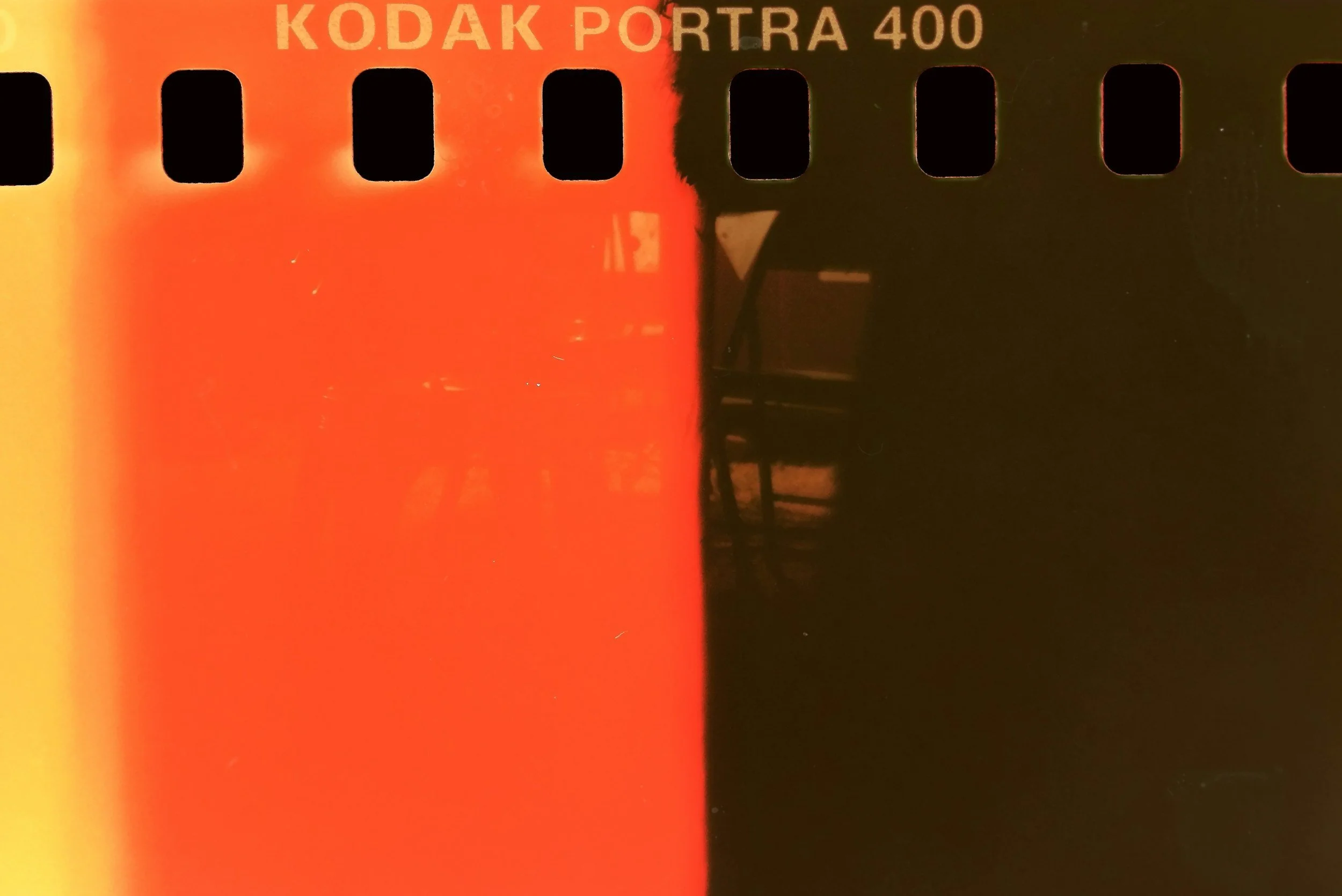
If I had to marry one film stock, it is Kodak Portra 400. Many wedding photographers rely on it, and for good reason. It’s forgiving when the light is not, it holds highlights with grace, and it renders skin in every shade the way skin actually looks, warm and dimensional and human. It is the beautiful, dependable default, and you’ll always find it in our bags.
But half the joy of film is that it is not one look, it is a whole shelf of them, each roll with its own personality. So sometimes we stray. Lomography stocks throw unexpected color and a little chaos into a frame, which is exactly right for the loose, late, sweaty part of a reception. And there is always room for black and white. A roll of Ilford HP5 or Kodak Tri-X strips a moment down to light, shape, and feeling, and some emotions simply read truer when color isn't a factor. Choosing the stock is part of the art. We match the film to the feeling of the moment, not the other way around.
35mm vs medium format: two ways to shoot a wedding on film
We shoot two film formats, because they see the world differently.
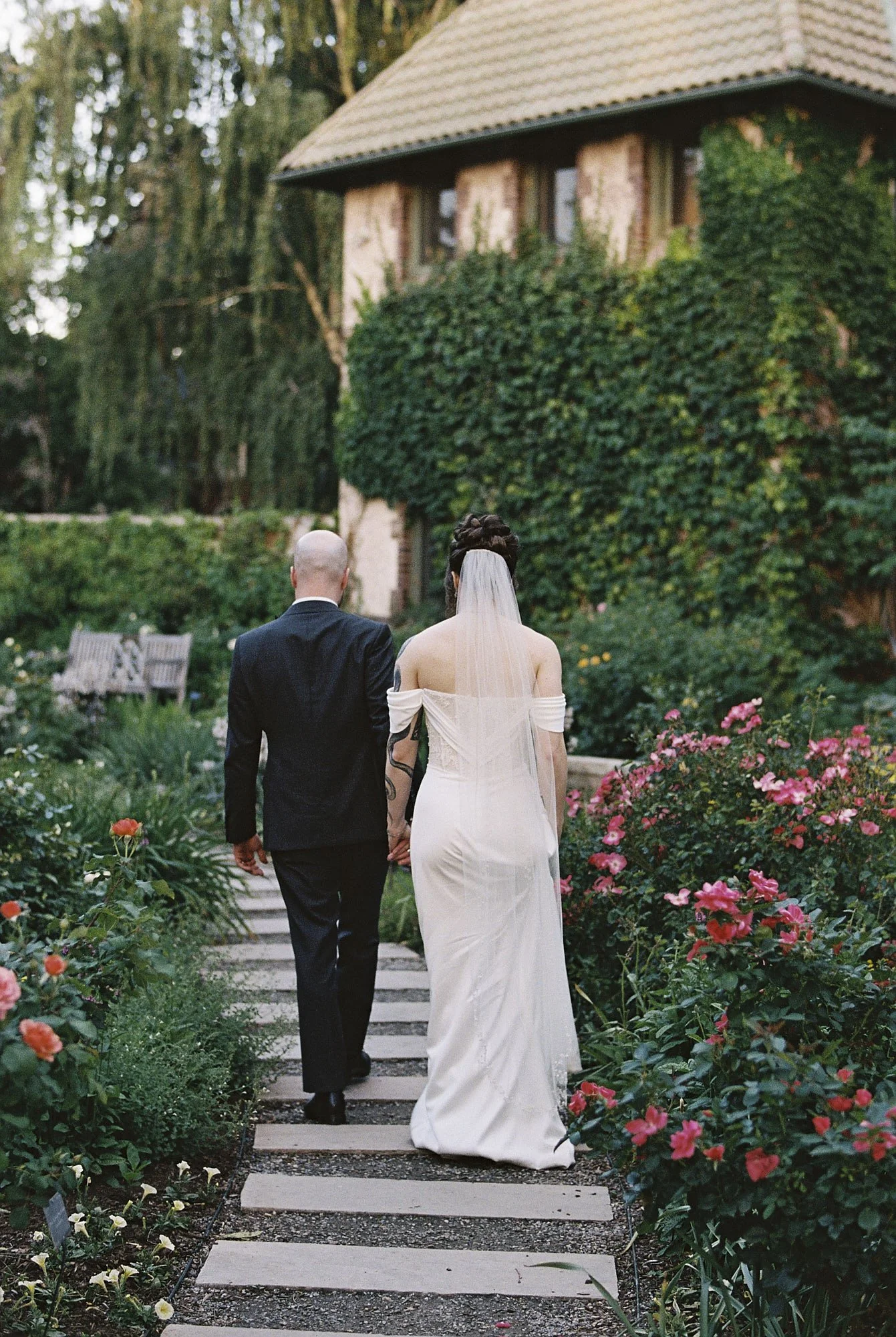
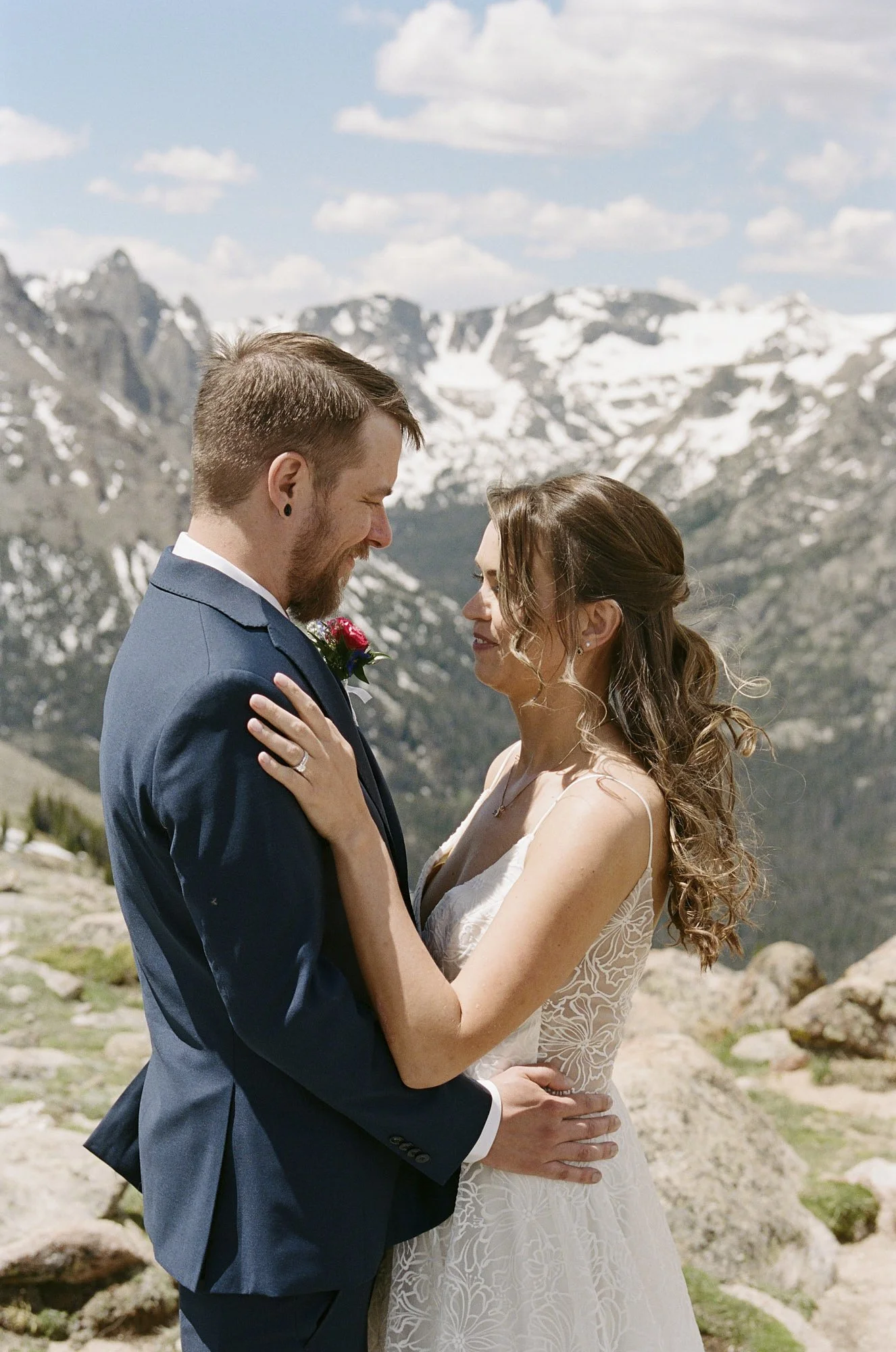
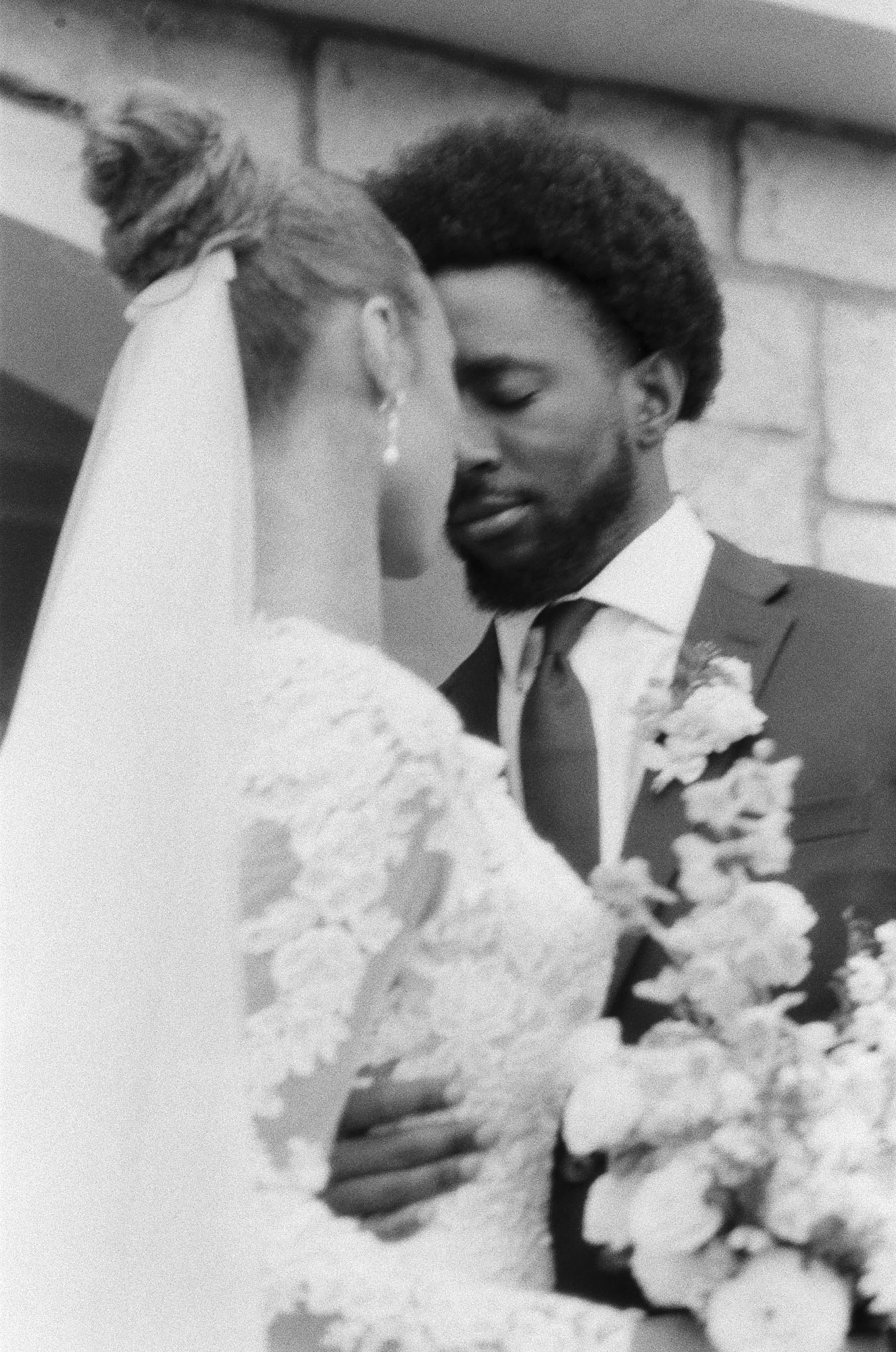
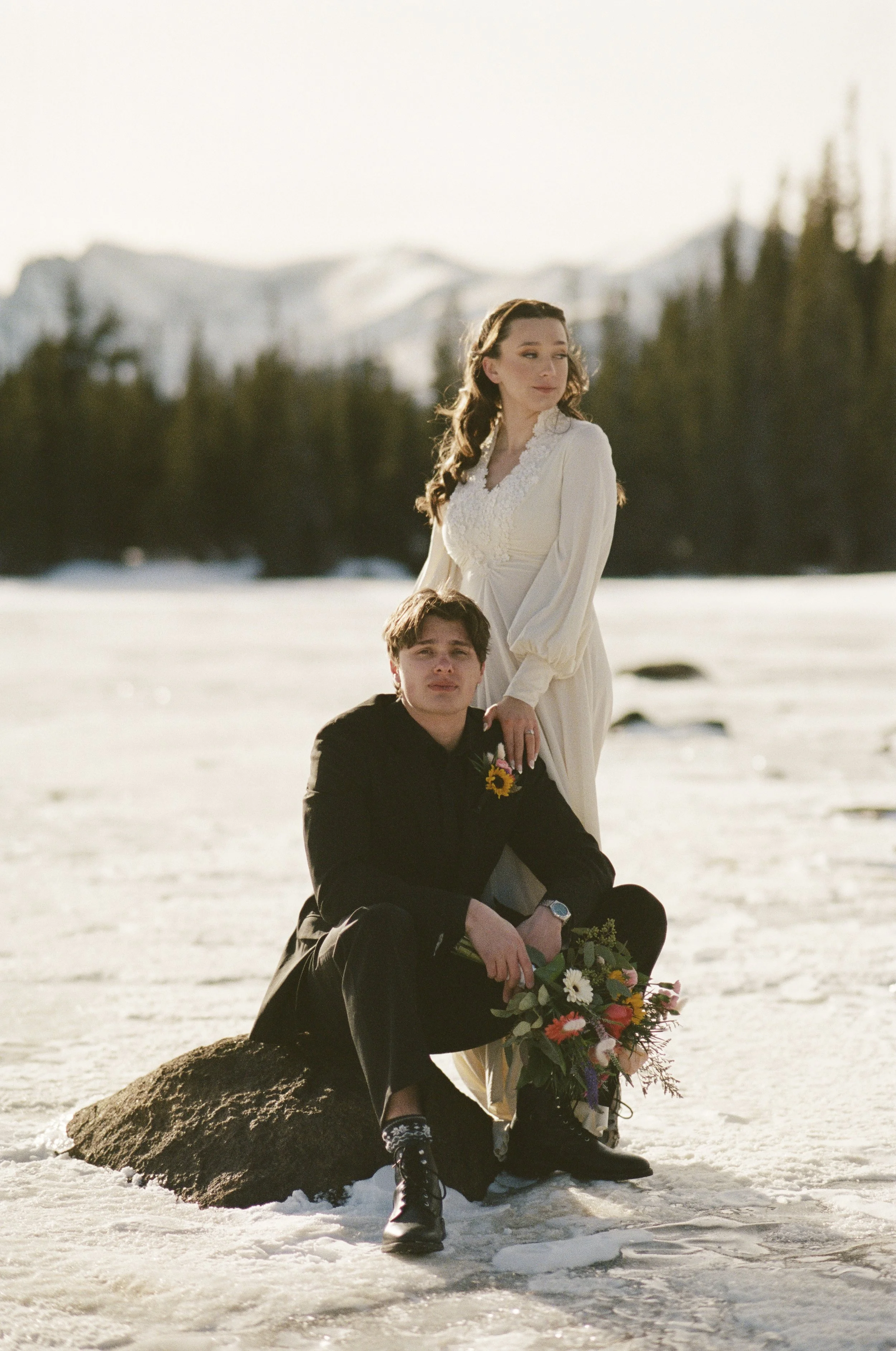
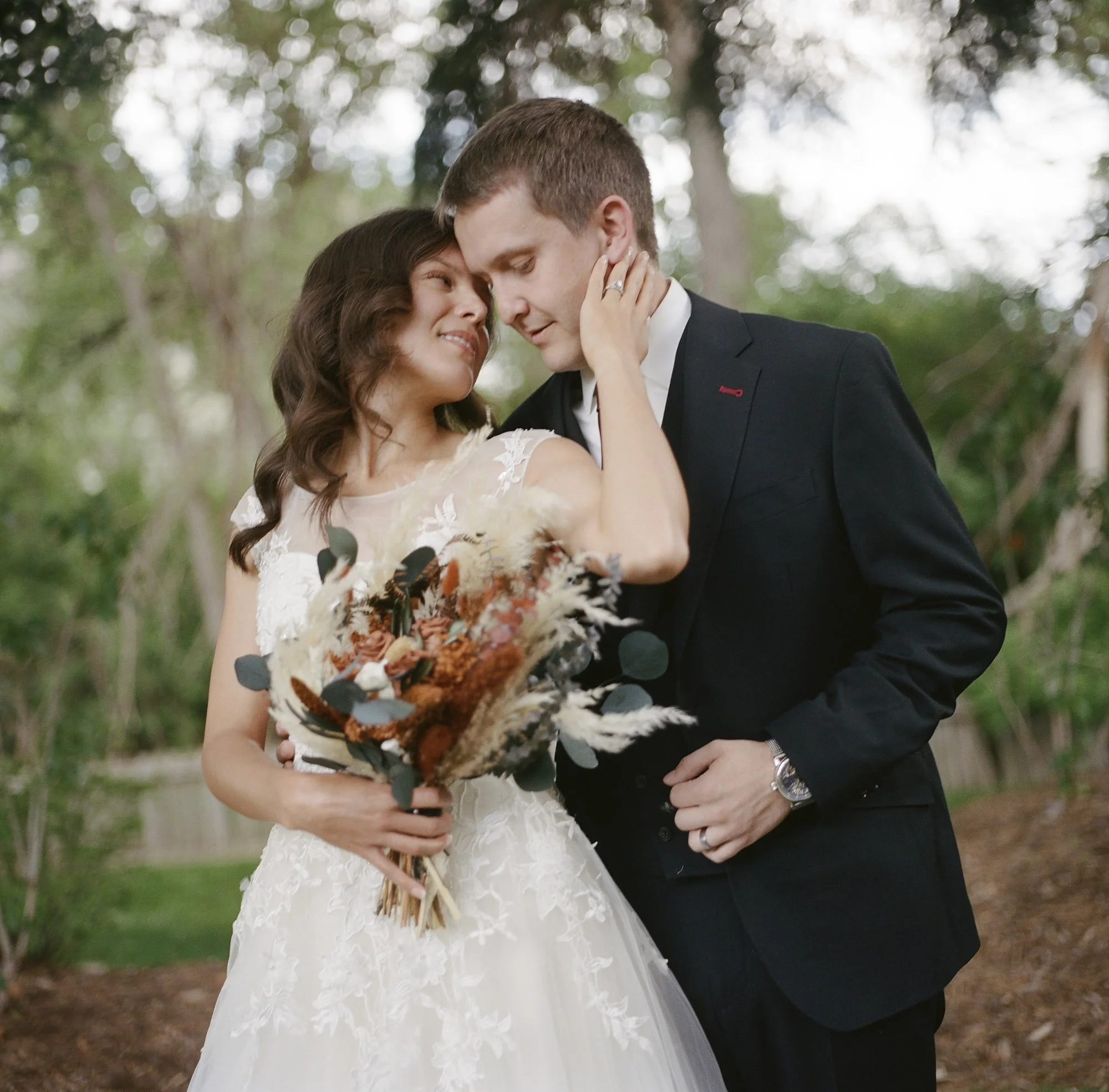
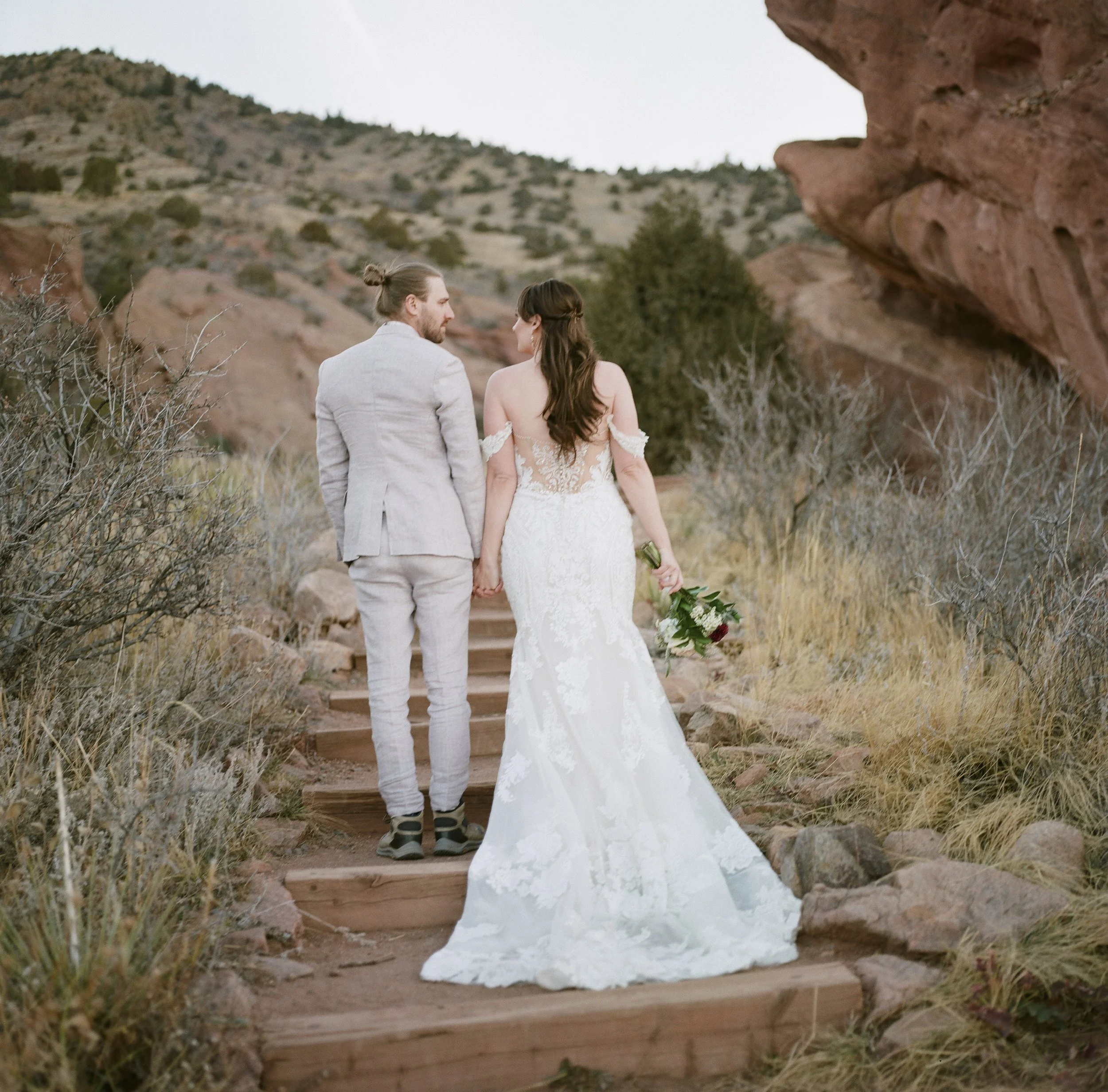
35mm is the small, quick one. The negative is roughly the size of a thumbnail, the camera is light and fast, and you get thirty-six frames to chase whatever is happening. It runs a little grainier and more alive, which makes it the right tool for candids, the walk down the aisle, the dance floor, and all the fast-paced moments of the day.
Medium format shoots a much larger negative on 120 film, and this is Ethan's home turf. A bigger negative means more detail, smoother tone, and that deep, quiet, nearly three dimensional look you see in editorial portraits. The trade is frames and speed. You get ten shots per roll, on a camera that insists you slow down and shoot differently. So we save it for the moments that earn the extra weight: the portraits, the vows, the details worth printing large and hanging on a wall.
Why everyone is finding their way back to film
Film is having a moment. Disposable cameras are turning up on reception tables again, the big labs are running at capacity, and a generation raised entirely on screens is buying back the point and shoots their parents gave away. Some of that is trend, and trends move on, but I’m not worried about it.
Because underneath the trend is the reason film never really left. In a world of infinite, instant, increasingly AI generated images, a photograph that had to physically happen to a piece of silver carries more truth. It’s proof that you were there, it’s not just about nostalgia, it’s about meaning, and meaning is what makes a picture worth holding onto.
There’s also a reason our parents' wedding photos still feel nice to look at: soft, warm, and a little grainy. (If we can ignore those wild 80s and 90s wedding dresses.) It’s because film was never trying to be a trend. Film stocks were developed to capture life truthfully, not to look cohesive on your Instagram grid. Your photos will hold up the same way.
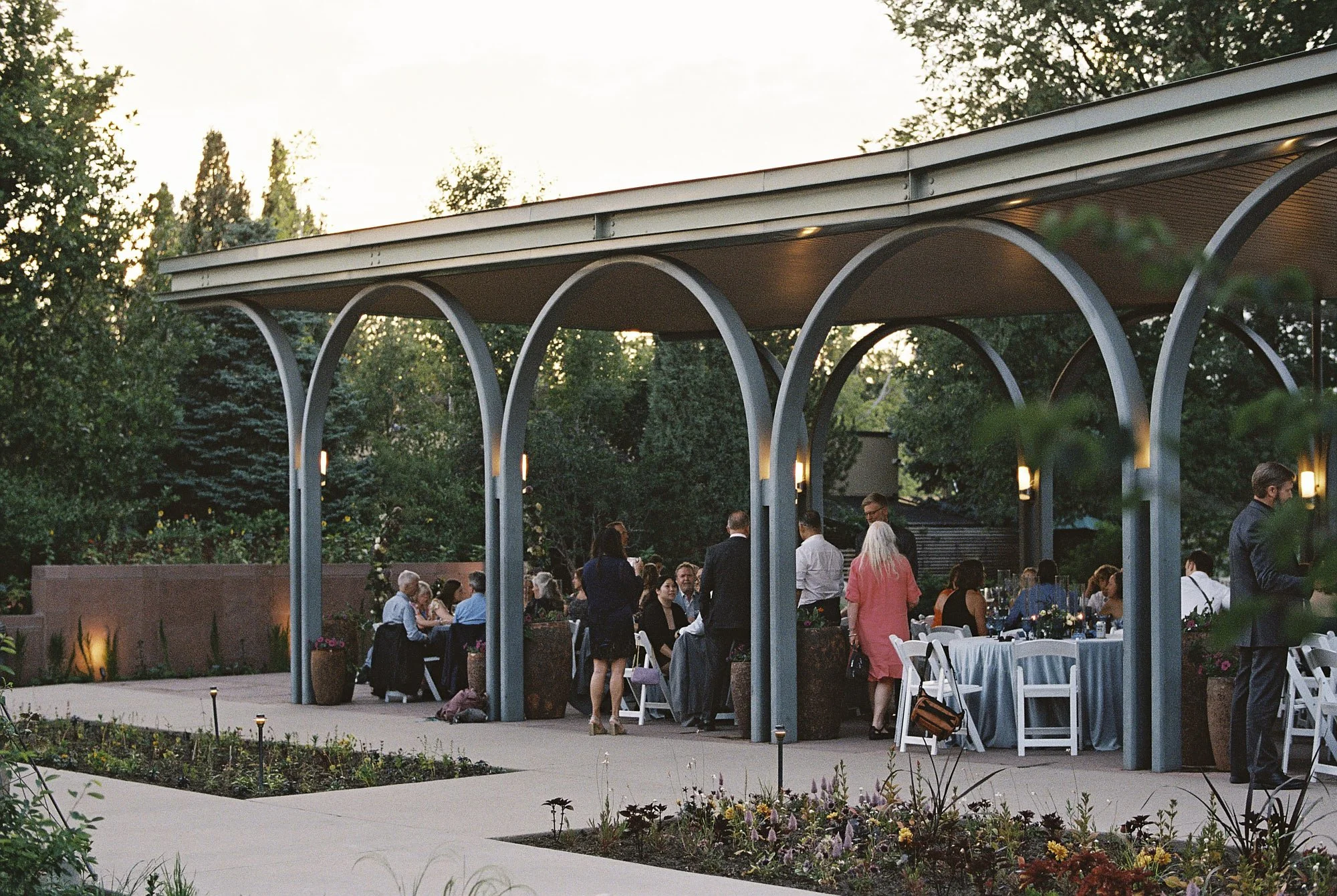
How we shoot film and digital together on a wedding day
We shoot hybrid, film and digital side by side. Film is included in every collection to bring the warmth and artistry that is so unique, while digital comes along for the reliable, unglamorous work and the security of knowing the entire day is covered no matter what.
Thinking about film for your day?
If you want your photographs to feel less like files and more like something you hand down, film belongs in your day. Tell me about the two of you and how you picture it, and we will figure out where film will matter most and how much of your day is worth living on it.
Related Reading
Bridal Portraits on Film: Traditional Meets Editorial
A bridal portrait session isn't documentation, it's closer to a painting. Deliberate, composed, shot on film, and built to outlast the wedding day.
How to Choose Your Wedding Photographer
Style and price are the easy filters. The harder question is whether you actually like this person enough to spend a whole day with them.
Frequently Asked Questions
-
For most couples who care how their photos feel and how they hold up over the years, yes. Film gives you softer highlights, truer skin tones, and a physical negative you can archive and reprint for decades. It is not about replacing digital, it is about what film adds that a digital file alone can't.
-
Digital records light as data, which makes it fast, reliable, and easy to correct. Film records light as a physical change in silver, which gives it the soft, dimensional look people connect with older photographs. We shoot both, so your gallery gets digital's reliability and film's soul.
-
A preset gets you close to the look, but it works backward from a finished digital file toward an idea of film. Real film builds the look forward, in the moment, from actual chemistry reacting to actual light. The grain, the highlight glow, and the color are physical, not a filter laid on top.
-
Our go-to is Kodak Portra 400 for its forgiving latitude and beautiful skin tones. We also reach for Lomography stocks when we want unexpected color, and black and white films like Ilford HP5 or Kodak Tri-X when a moment reads truer without color. We match the stock to the feeling.
-
35mm uses a small negative and thirty-six frames per roll, so it is quick and lively, right for candids and the dance floor. Medium format uses a much larger 120 negative with only ten frames, so it is slower and far more detailed, which is why we save it for portraits, vows, and images worth printing large.
-
Both. We shoot hybrid, and film is included in every collection, not sold as an upgrade. Digital covers the fast and low-light moments, and film carries the heart of the gallery.