
Dream Lake: A Photo Guide for Engagements, Proposals & Elopement Portraits
Dream Lake is not one of Rocky Mountain National Park's designated wedding ceremony sites, so you cannot legally hold a ceremony or exchange rings or vows here. What you absolutely can do is bring a ring, a camera, and a plan: Dream Lake is one of the best places in the park for a surprise proposal, an engagement session, or elopement portraits taken before or after a ceremony.
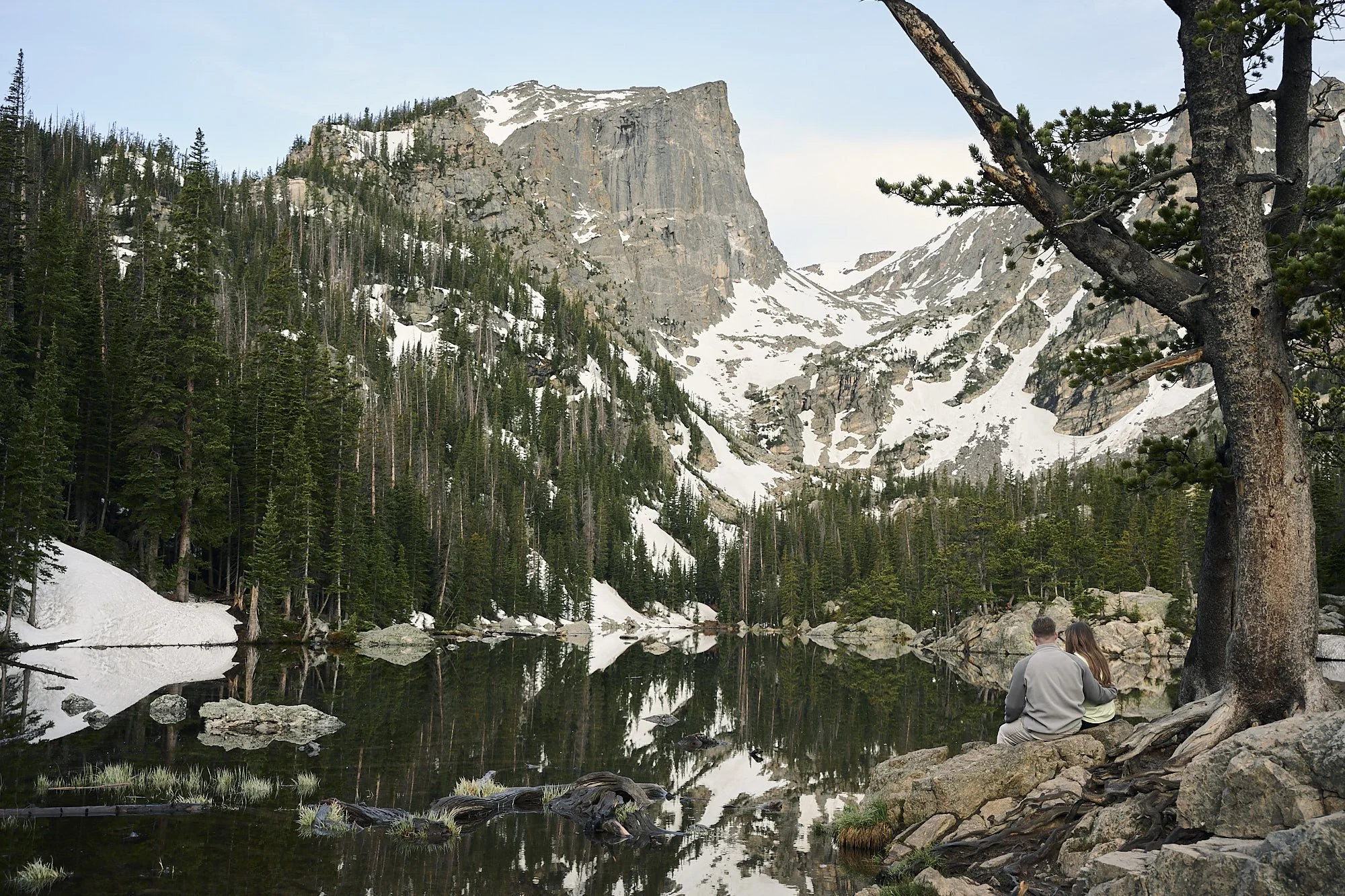
If you've fallen down the Pinterest rabbit hole of alpine-lake photos with a granite peak mirrored in glassy water, there's a good chance you were looking at Dream Lake. It is, by a wide margin, one of the most photographed spots in the park, and once you stand on its shore at sunrise you understand why. The lake stretches out in a long, narrow basin, Hallett Peak and Flattop Mountain rise straight up behind it, and on a still morning you get a perfect reflection.
It's also wonderfully reachable. At just over a mile from the trailhead, Dream Lake is the sweet spot of the Bear Lake corridor: far enough in to feel like an actual hike, but close enough that you don't have to be an athlete or make it an all day thing. That combination makes it one of our our most-requested spot for engagements and proposals, and a favorite stop for elopement portraits.
Dream Lake: One of the best Rocky Mountain National Park Proposal Spots
If you're planning a Rocky Mountain National Park proposal, Dream Lake is about as good as it gets — a short, doable hike, a Hallett Peak reflection that does half the work for you, and early light soft enough to make the moment look exactly as big as it felt. Tell us the plan and we'll tuck into the rocks, catch the "yes," and have the ring-on-the-hand shot before the happy crying stops.
Engagement and Elopement Portraits
Couples ask us about Dream Lake for a variety of reasons, and it shines for all of them. And, since the park dropped its photography permit requirement in 2024, you don't need any special paperwork for a portrait session, just a timed entry reservation (more on later).
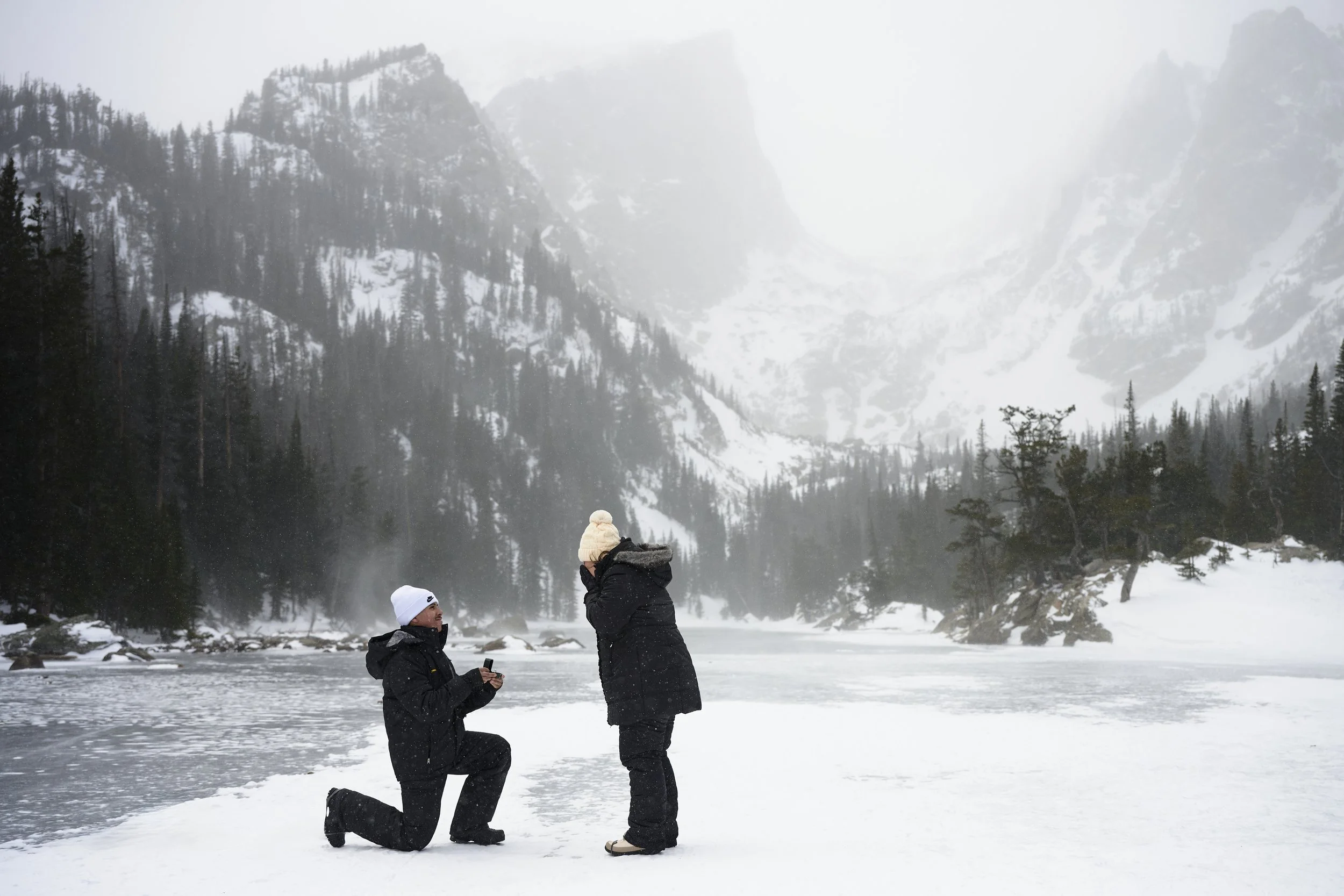
Engagements
If you’re already engaged and want your engagement photos to scream Colorado, Dream Lake makes for an iconic backdrop. Because the hike is so short you can choose to dress in more classic engagement outfits or learn into the Colorado casual vibes and wear your standard hiking attire. We can hike up together or meet at the lake and capture all the scenic spots on the shore and along the trail.
Elopement Portraits
If you're eloping elsewhere in the park, Dream Lake is the postcard you hike to afterward. Whether your actual ceremony happens in the park or at a nearby venue, Dream Lake gives you the epic mountain wedding photos you’ve been dreaming of. Check out our RMNP Elopement Guide to find out where you can actually get married in the park.
The Basics
Trailhead: Bear Lake parking lot
Distance: 1.1 miles each way (2.2 miles round trip)
Elevation gain: About 425 feet
Starting elevation: 9,475 feet (Bear Lake trailhead)
Ending elevation: 9,900 feet (Dream Lake)
Difficulty: Easy to moderate
Time (one way): 30 to 50 minutes, depending on pace
Trail surface: Packed dirt, rock steps, exposed roots, a couple of footbridges
Winter conditions: Snow-packed, microspikes required, often quite windy at the lake
At the Trailhead: The Bear Lake trailhead is the most developed trailhead in this part of the park: there's a manned ranger station where you can ask about conditions, vault (pit) toilets, and a large parking lot. "Large" is relative, though. It still fills early, frequently by 6 to 7 a.m. in summer, so plan your arrival around that, not around when you'd like to wake up.
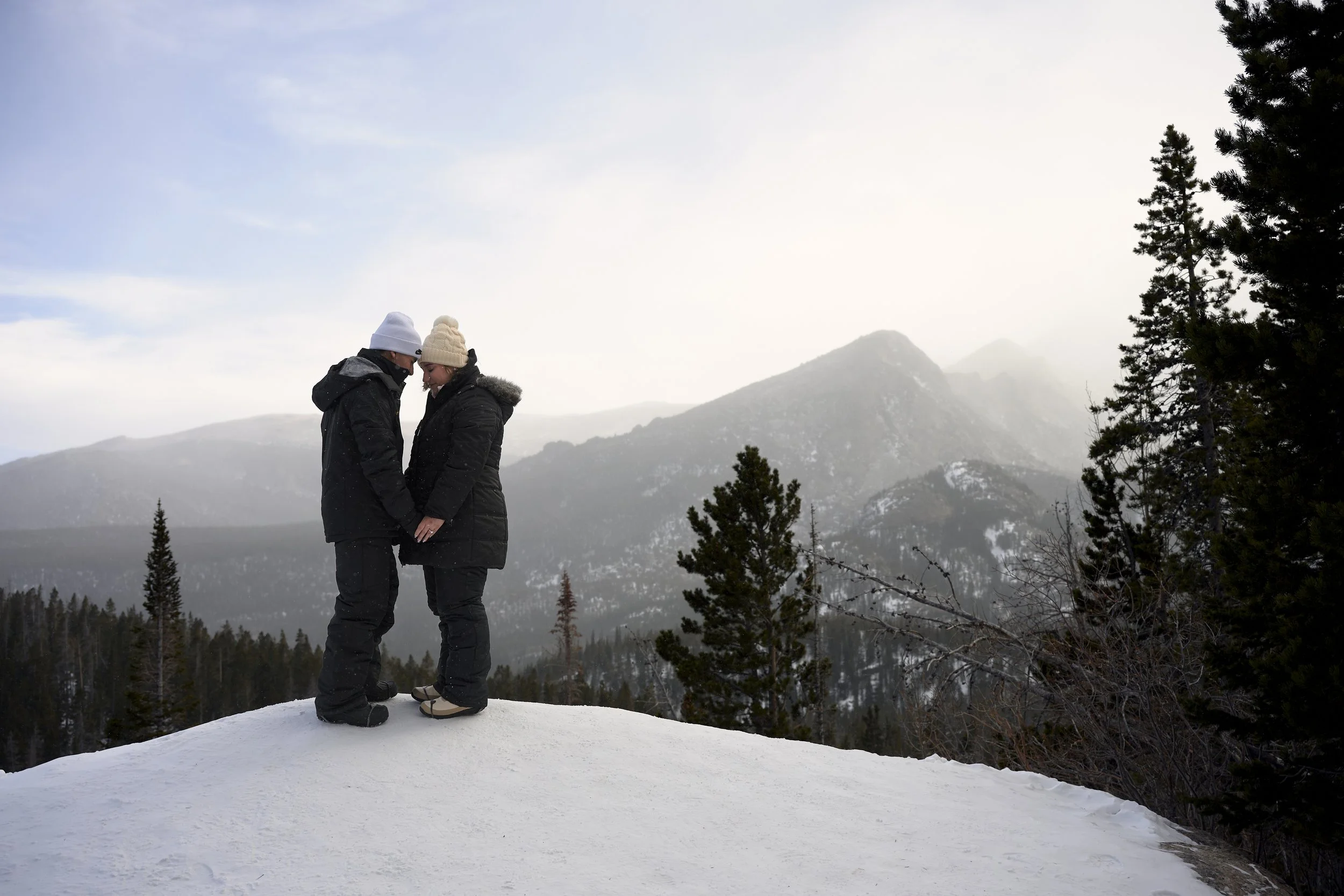
The hike, and everything worth photographing along it
Here's the thing a lot of people aren’t thinking about: the lake is the headline, but it's far from the only beautiful spot. The trail to Dream Lake threads through some of the loveliest forest in the park and opens onto a viewpoint that's arguably as good as the destination. We shoot the whole way up (or down), not just the shoreline.
From the Bear Lake trailhead the path forks away from the Bear Lake loop and climbs steadily through dense subalpine fir and Engelmann spruce. The first half mile is all forest, and in the morning the light comes through the trees in long dusty beams while the floor lies soft with needle duff. Those shaded, intimate frames are some of our favorite portraits of the whole route, and they're a gift on a windy or harsh-light day when the lakes aren't cooperating.
Half a mile in, the trees open onto Nymph Lake, a small, round, lily-pad-fringed pool at about 9,700 feet that looks like something out of a storybook in July. It sits in a little basin with Longs Peak beyond, and on a calm early morning it takes a reflection beautifully. Most couples pause here for a few frames before the climb steepens. Just above Nymph the trail switchbacks up an open shoulder, and this is the sleeper spot of the hike: look back and you get Nymph below you with the whole sweep of Longs Peak and Glacier Gorge across the valley. It's the best wide, environmental view on the route, the kind where you and the mountains share the frame, and it's worth slowing down for rather than powering through on the way to the lake.
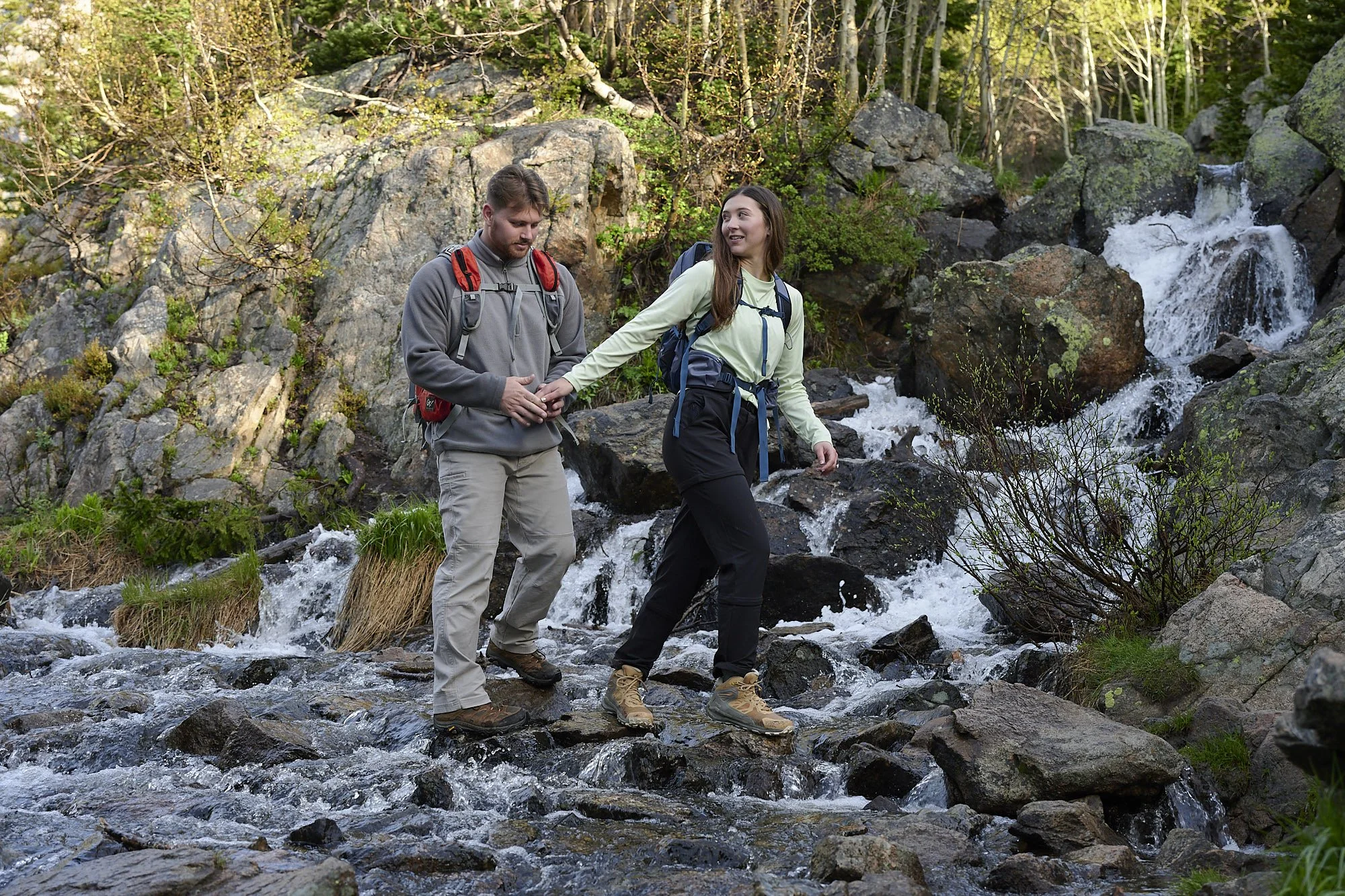
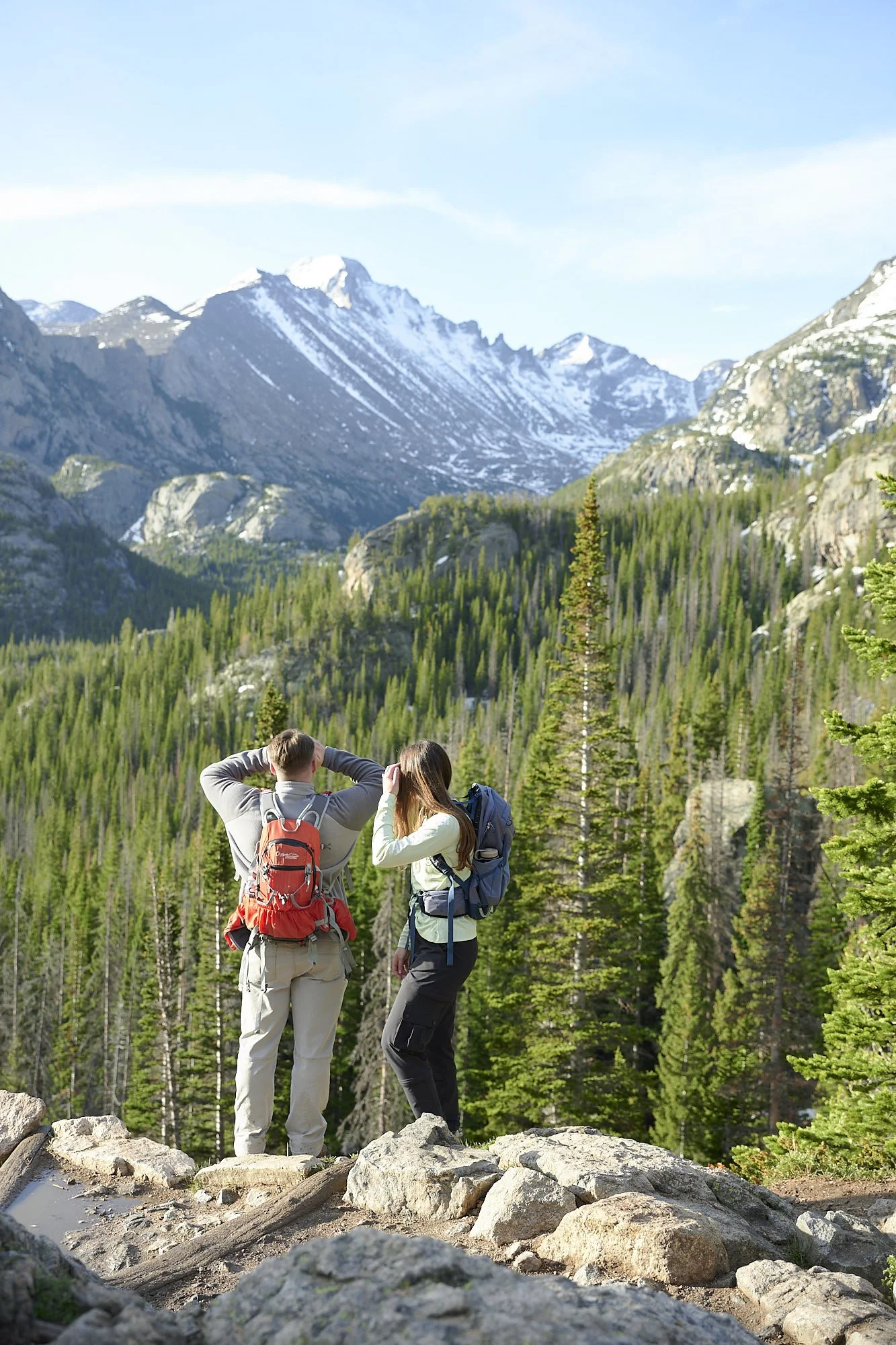
Near the top, just before Dream, the outlet stream tumbles down through the rocks and the trail crosses it on a little wooden footbridge. The bridge, the running water, the framing trees: it's a quiet, romantic spot that almost everyone walks right over on their way to the lake, and one we almost always stop for. Then the trail crests and the basin opens. At about 9,900 feet, Dream Lake runs long and narrow toward Hallett Peak and Flattop Mountain, which rise in a clean granite wall behind the water. On a still morning the reflection is the photograph people travel across the country for, though the wind tends to build as the day goes on and ripple the surface, which is one more reason we chase first light. The north shore has boulders and scattered pines that make great foreground and give you somewhere to sit and just be there for a minute.
If you've still got energy and good weather, the trail continues another 0.7 mile up to Emerald Lake, a more dramatic cirque tucked higher in the rock. Plenty of couples turn Dream into Dream-and-Emerald and make a morning of it.
Want the bigger cirque at the top of the trail? See our Emerald Lake guide.
Timed Entry: How to get it, and how to skip it
Dream Lake starts at the Bear Lake trailhead, which sits inside the park's most strictly managed zone: the Bear Lake Road Corridor. From late spring through mid-fall, you need a reservation to drive in during the day. This trips up more couples than anything else, so here's exactly how it works for 2026.
When You Need a Reservation
A Timed Entry + Bear Lake Road reservation is required to enter the corridor between 5 a.m. and 6 p.m. from May 22 through October 18, 2026. This permit covers the whole corridor: Moraine Park, Sprague Lake, the Park & Ride, Glacier Gorge, and Bear Lake.
How to Get One
Reservations are released on Recreation.gov under the park's timed entry system. A block of permits opens about a month ahead (released on the 1st of the prior month in the evening, Mountain Time), with a second batch of next-day permits released at 7 p.m. the evening before. You'll pick a two-hour entry window to enter the park, but once you’ve entered within that window, you can stay as long as you like. Book early. The Bear Lake permits are the first to vanish.
THE INSIDER MOVE
You can skip the reservation entirely by entering the corridor before 5 a.m. (or after 6 p.m.). For a summer sunrise shoot this is exactly what we do. Set your alarm early and roll through the Bear Lake Road entrance station in the dark, no permit needed, before most people are even awake.
The Park & Ride Option
Because the Bear Lake lot fills so early, the park runs a free shuttle from the Park & Ride hub partway up Bear Lake Road. If the upper lot is full, you park here and ride the Bear Lake route up. Two things to know: during timed entry hours you still need the corridor reservation just to drive to the Park & Ride, and the shuttle starts in the morning but not at oh-dark-thirty, so for a true pre-dawn sunrise shoot, the before-5 a.m. drive-in is still the move. The shuttle is the hero for mid-morning engagement sessions when the lot is already packed.
BONUS: SKIP THE DRIVE ENTIRELY
You don't even have to drive into the park. The Hiker Shuttle runs from the Estes Park Visitor Center straight to the Park & Ride, where you transfer to the free Bear Lake route, so you can leave your car in town (or at your lodging) and let someone else handle the road and the parking. The bonus: riding the Hiker Shuttle means you don't need a timed entry reservation at all, just a valid park pass. You do need a Hiker Shuttle ticket ($2 per reservation), bought ahead on Recreation.gov (not sold in person), and every passenger needs one. In 2026 it runs daily May 22 to September 7, then weekends only through October 18, with morning departures starting around 8:30 a.m.
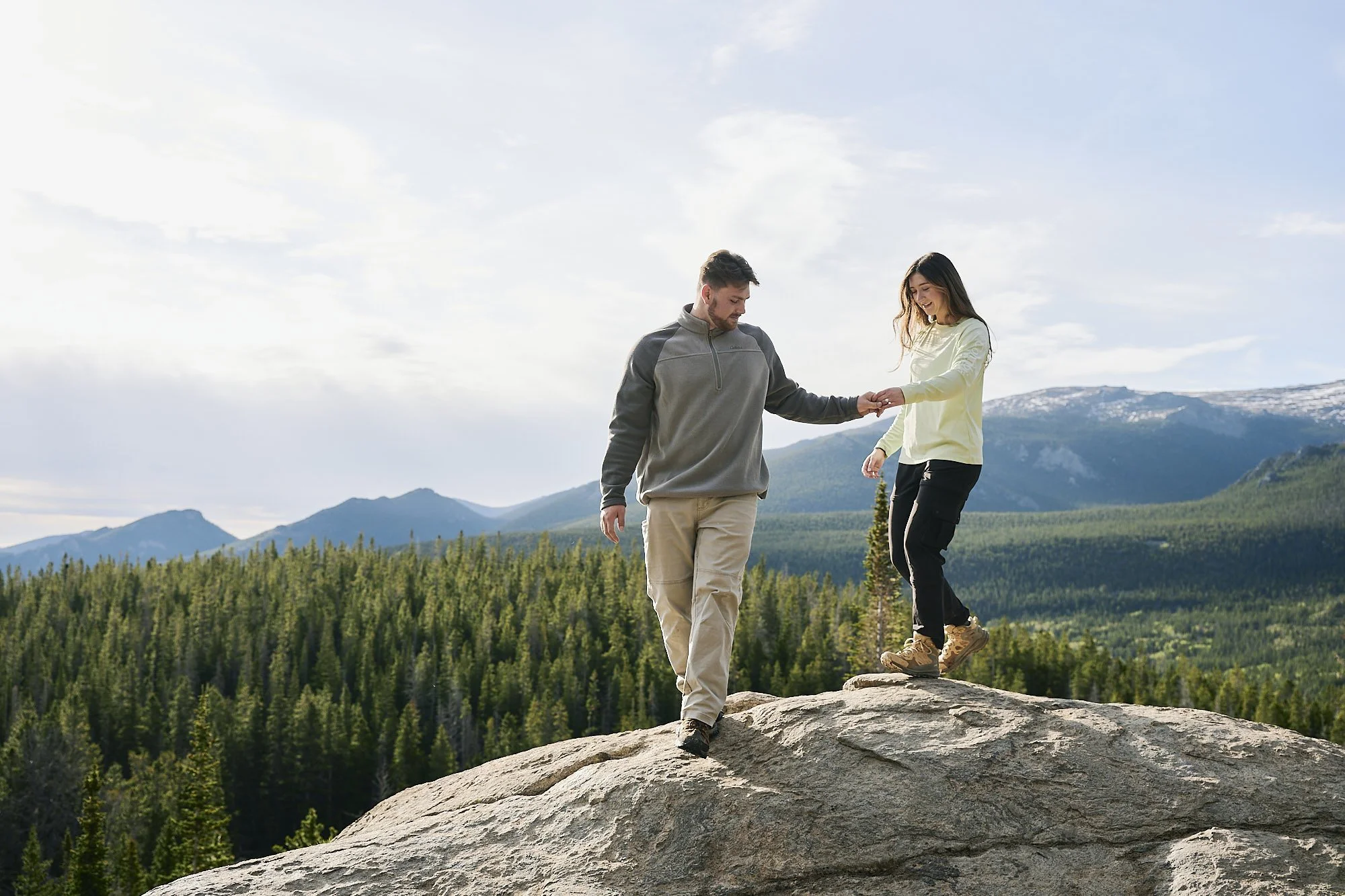
The Best Time To Go
Two answers, and they stack: weekday and sunrise.
Weekdays, especially in summer, are dramatically quieter than weekends. And sunrise is the magic hour here for every reason at once: the light is soft and golden on Hallett Peak, the air is usually still so the reflection holds, the parking situation isn’t a disaster yet, and the trail is quiet and calm. By mid-morning in July, Dream Lake can have a steady parade of hikers and a breeze that scatters the mirror. Come at first light on a Tuesday and you may share the lake with a marmot and not much else.
The Seasons, and why we love all of them
There's no bad season at Dream Lake, only different ones. Here’s the breakdown.
Summer (late June to early September)
This is the classic time to visit Dream Lake. The forest is lush, wildflowers crowd the lower trail, the lily pads come out at Nymph, and the whole forest feels alive. It's also the most crowded and most weather-prone season: afternoon thunderstorms build fast and can turn dangerous above treeline, so we want to be up early and heading down by late morning. Sunrise is non-negotiable here, both for the crowds and guaranteed weather. But despite it being summer, bring an extra layer anyway. It's a different world temperature-wise at 9,900 feet than it is in Estes.
Fall (mid-September to mid-October)
The second most popular season at Dream Lake. The crowds start to thin after Labor Day, the mornings turn crisp and impossibly still (which means the year's best reflections), and the first dustings of snow powder the peaks behind the lake, really adding to the majesty of the mountains. During this season you’ll see leaves changing on your drive up and hear elk bulging across the valley. (Search YouTube for what they sound like. You cannot possibly imagine if you haven’t heard them.) Most of the forest along the trail is pine, so it’ll stay evergreen rather than gold, but the light lasts longer and the park gets sleepier.
Winter (November to April)
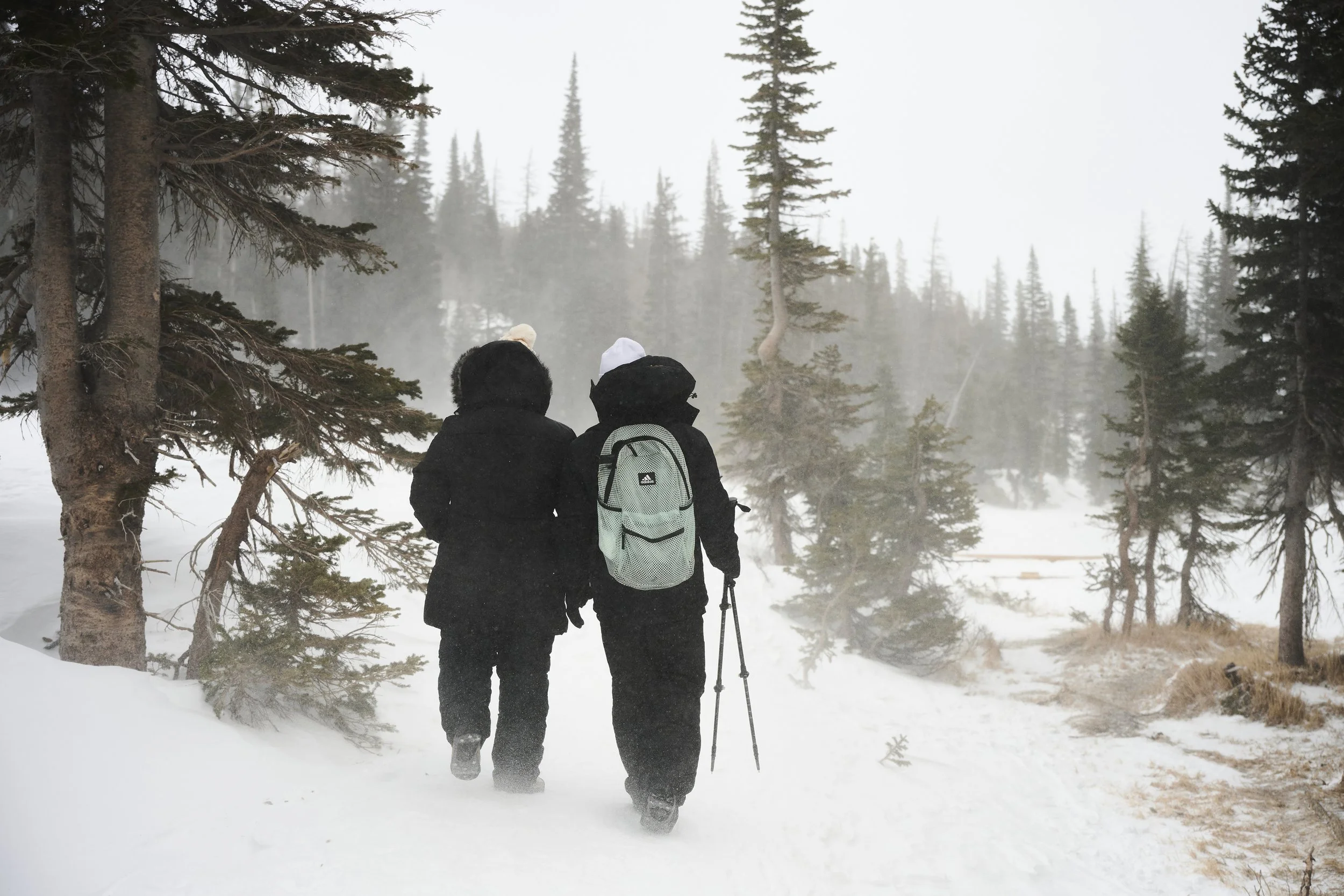
Winter is truly a magical season. The trail is covered in snow, the mountains glitter in the sun, and lakes freeze solid enough that you can walk across them later in the season. (Hello shortcuts!) Winter is quite and beautiful, but it's also the most demanding: snow can bury the trail, making navigation a little trickier after a fresh snow, microspikes become a requirement, and the lake itself can savagely windy and cold, with gusts pouring off Flattop that cut straight through you. In this season, preparation is everything, but on those days when it's calm and bright, a winter day at Dream Lake is one of the most beautiful places on earth.
Spring (April to early June)
Spring in the mountains is a true wildcard. Snow can linger deep into May, the trail goes muddy and slushy as it melts, and the ice on the lake becomes suspect. It's the least predictable season for a photo plan, and you genuinely never know what you’ll get as far as temperatures or weather, but when conditions line up, you get the rare combination of a frozen-and-thawing lake, snow on the peaks, and almost no one around. Spring is the time when we watch the weather the closest and always have a backup plan.
The Locals: a word on the wildlife
Part of the joy of a dawn hike in Rocky Mountain National Park is the company. Mule deer drift through the forest, elk graze in herds, and in fall the bulls bugle that strange, wild, flute-and-bagpipe call across the dark. If you're very lucky, you may spot a moosein the willows near the lower wetlands or taking a swim in a lake. (Just make sure you keep your distance!)
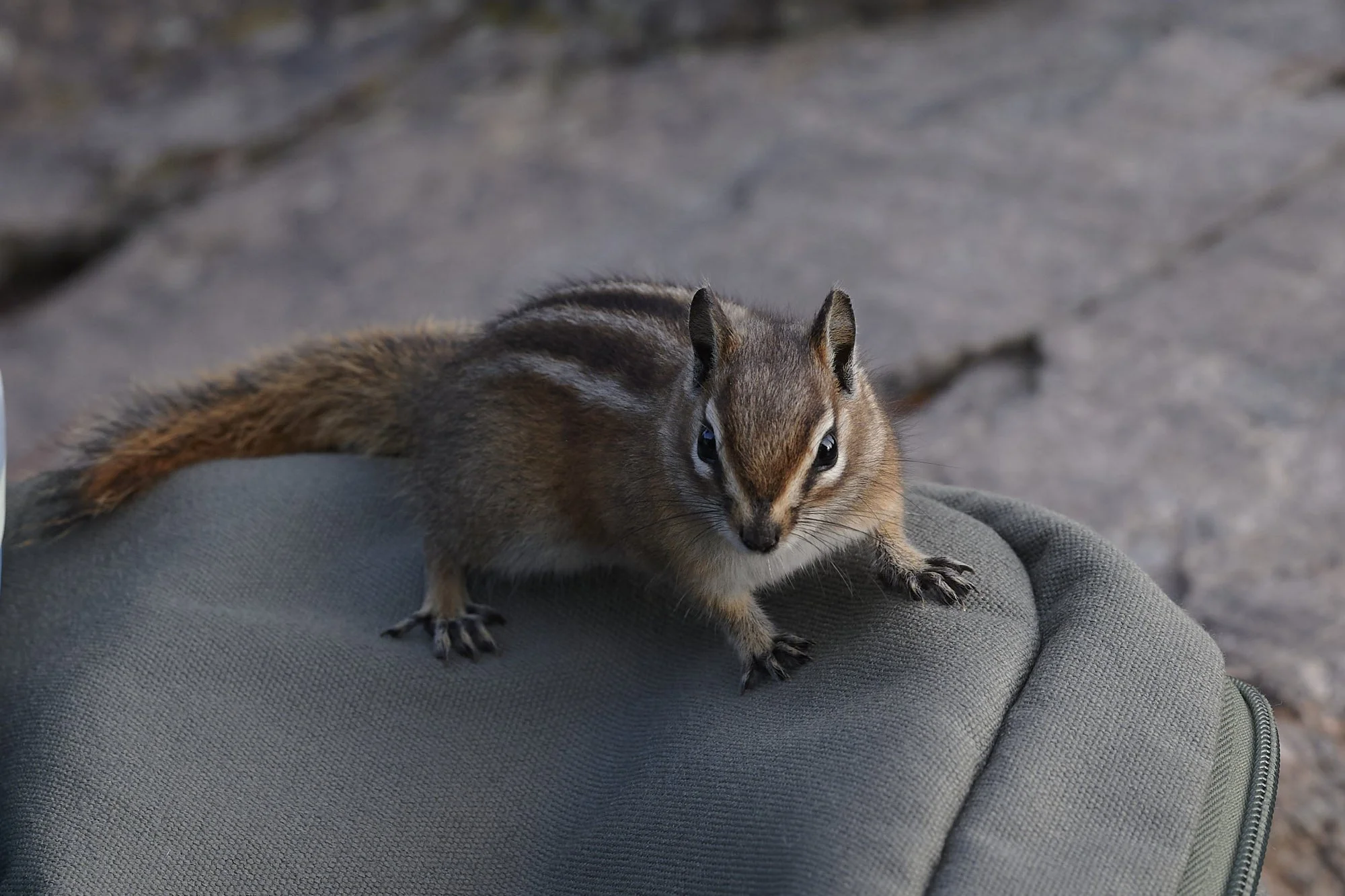
Closer in, the small residents steal the show. Golden-mantled ground squirrels and chipmunks scamper along the rocks at Nymph and Dream, comically bold and absolutely not to be fed. (No matter how persuasively they beg.) Up in the boulder fields, yellow-bellied marmots sprawl on warm rocks like tiny sunbathing bears, and pikas dart through the talus with mouthfuls of wildflowers, squeaking their indignation that you dare enter their home. Overhead and underfoot you'll meet the birds: bold gray jays (the famous "camp robbers") that will case your snacks, flashing-blue Steller's jays, raucous Clark's nutcrackers, cheerful little mountain chickadees, and, in summer, broad-tailed hummingbirds that zing past. It is, reliably, a more crowded shoreline than you'd think, just not with people.
WORTH KNOWING
Give all wildlife room, never feed anything (it's harmful and illegal in the park), and keep a wide distance from elk and moose, especially in fall rut and spring calving. A long lens gets the shot; your two feet do not need to.
What to Wear and Bring
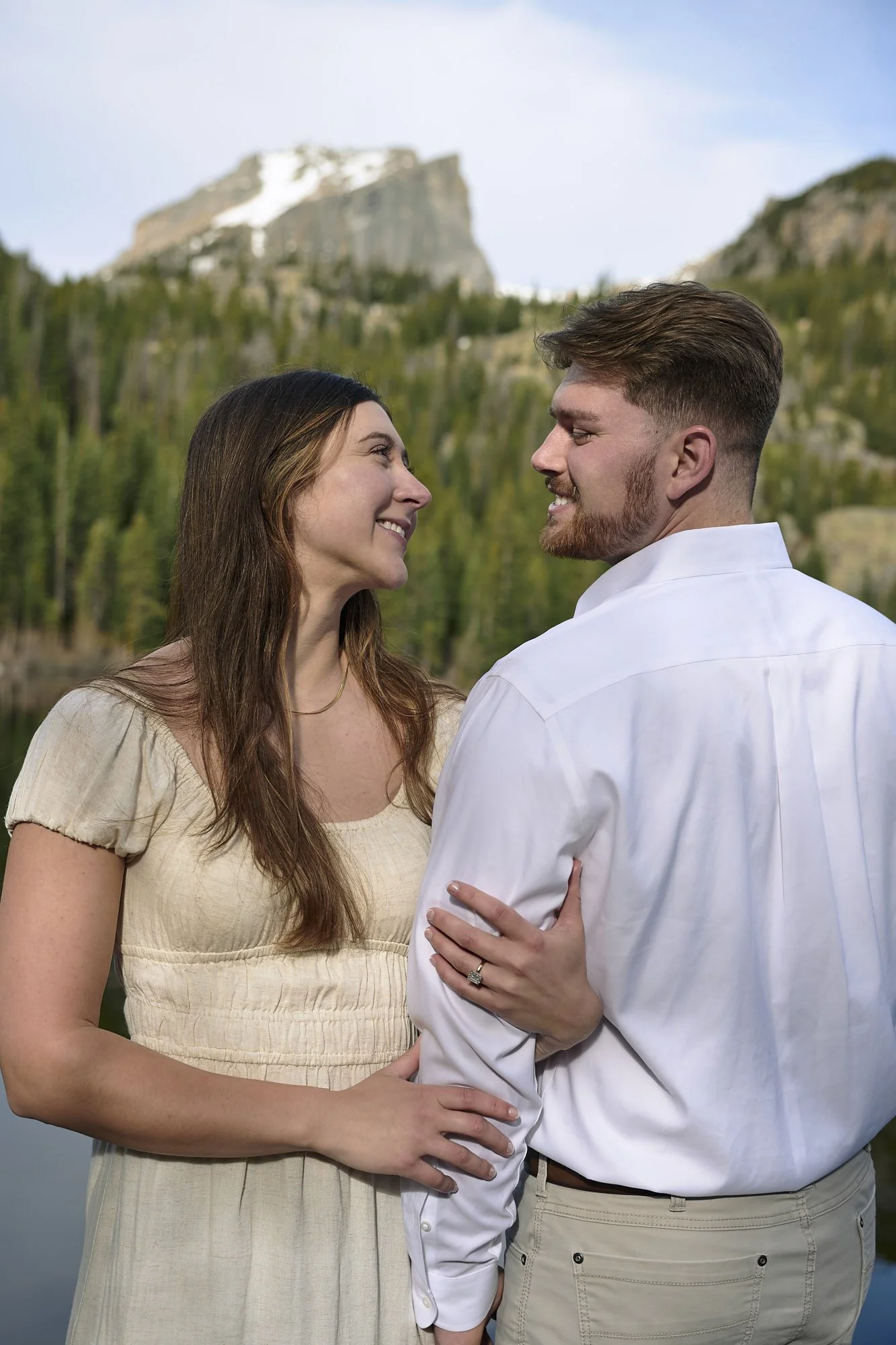
For an engagement session or proposal, dress like you're going on a beautiful little hike, because you are. Closed, grippy shoes (trail runners or boots) for both of you; the trail is rocky with roots and stone steps. If you want the flowy-dress-on-the-shoreline look, hike up in real shoes and swap at the lake, we do this constantly. Always pack a warm layer even in July; the lake is colder and windier than the trailhead, often by ten or fifteen degrees. Add water, a snack, sun protection (UV is fierce up here), and, in the shoulder seasons or winter, microspikes and a headlamp for the pre-dawn start.
WORTH A READ
For the full breakdown on dressing for an alpine shoot, see our what-to-wear guide.
Is Dream Lake right for your shoot?
Pick it if:
You want one of the most recognizable alpine backdrops in Colorado without a punishing hike
You're planning a proposal or engagement session and want a real-but-reachable adventure
You're up for an early start to catch sunrise and beat the crowds
You're eloping nearby and want eye-catching portraits to hike to
Consider something gentler if:
Neither of you is comfortable hiking at altitude
You can't swing an early-morning timeline
You want guests along who won't (or can’t) make it up the trail
COMPARE
For couples who want a Continental Divide reflection with zero elevation gain, Sprague Lake at sunrise is the easy, beautiful alternative, flat, short, and stroller-friendly. See our Sprague Lake guide.
Dreaming of a photo session at Dream Lake?
Whether it's a sunrise proposal, an engagement session, or elopement portraits to hike to, send us a note.
We'll talk timing, timed entry, and how to catch that reflection before the wind finds it.
Frequently Asked Questions
-
No. RMNP only permits ceremonies at thirteen designated sites, and Dream isn't one of them. Even a small, private vow exchange is a citable offense for you, your photographer, and your officiant. Dream Lake is for proposals, engagement photos, and elopement portraits, not the ceremony itself. Pair it with a permitted site like Sprague or Bear Lake for the vows.
-
Not a photography permit. As of January 1, 2024, RMNP no longer requires one for couples taking portraits. You do, however, need a Timed Entry + Bear Lake Road reservation to drive into the corridor between 5 a.m. and 6 p.m. during the season, unless you enter before 5 a.m.
-
Sunrise on a weekday. The light is best, the water is calmest (which means the reflection), the parking hasn't filled, and the trail is quiet. Plan to start hiking about 30 to 45 minutes before sunrise. In summer, getting through the entrance station before 5 a.m. also saves you the timed-entry reservation.
-
Tell us the secret, not your partner. We'll position discreetly near the shoreline, blend in as another early hiker, and be ready for the moment. Sunrise on a quiet weekday gives you the privacy and the light. Then we transition straight into a celebratory engagement session while you're both still floating.
-
Dream is shorter (1.1 vs 1.8 miles each way), gentler, and has the more famous reflection. Emerald is higher and more dramatic but a real hike. Many couples do both, since Emerald is only another 0.7 mile past Dream. If you want maximum reward for minimum effort, Dream is the answer.
-
Yes, and it can be stunning, but it requires microspikes, warm layers, and respect for the wind and cold at the lake. The trail can be hard to follow under deep snow. We keep winter shoots short and watch the forecast carefully, and we don't recommend it for couples without any winter hiking experience.
-
Very, at peak times. Summer weekends mid-morning can mean a steady stream of hikers at the lake. The fix is simple and reliable: weekday, sunrise. Off-season and shoulder mornings can feel like you have the place to yourselves.